New Patients: Finding the right clinic shouldn't take forever! Click Here

Dr Yiannis explains what Ellansé treatment is, how it works, and how it compares to Sculptra, Julaine, Dermal Fillers, and Radiesse

When patients come to me asking about medical aesthetic treatments, the conversation almost always starts in one of two places. Either we’re looking to smooth out lines and restore some of the volume they've lost, or considering treatment that improves skin quality over time – something that feels less like maintenance and more like genuine, long-term change.
Most treatments do one or the other particularly well. Ellansé does both – and that's precisely what makes it one of the most clinically interesting treatments I've added to the Anti Wrinkle Clinic.
It isn't simply a filler, and it isn't simply a biostimulator. It sits in a category of its own – a hybrid treatment that provides immediate structural support while simultaneously triggering your own biology to gradually rebuild the collagen framework beneath the skin.
In this guide, I want to explain Ellansé properly. What it is, how it works, what makes it different from other treatments, what results you can realistically expect, and – just as importantly – when it's the right choice and when it isn't.
Ellansé is a collagen-stimulating injectable designed to restore facial structure while improving skin quality over time. It belongs to a category often referred to as biostimulators, but that label only tells part of the story.
In reality, Ellansé sits somewhere between traditional Dermal Fillers and regenerative medicine – combining the immediate visible result of a filler with the longer-term biological benefit of a collagen stimulator.
The product is composed of two key components:
This combination is what makes Ellansé fundamentally different than most injectable treatments available today [1][2].
Before I explain how the treatment works, I think it's worth establishing that Ellansé is neither new nor experimental.
Polycaprolactone – the active component – has been used in medicine for decades. It appears in absorbable surgical sutures, drug delivery systems, and orthopaedic and dental devices. Its safety profile and predictable biodegradation pattern made it a strong candidate for aesthetic medicine long before Ellansé existed [3].
Ellansé received CE marking as a Class III medical device in 2009 and has since been used across more than 70 countries worldwide. Over the years, multiple clinical studies and histological analyses have confirmed its ability to stimulate new collagen, its long-term volumising effects, and its strong biocompatibility when used appropriately by trained practitioners [1][2][4].
It has evolved from what was initially positioned as a "longer-lasting filler alternative" into something more sophisticated – a treatment used within structured, long-term facial rejuvenation strategies. That evolution reflects how much our understanding of facial ageing has advanced.
Ellansé works through a dual-phase mechanism. Understanding both phases is key to understanding why the treatment behaves so differently from anything else in its category.
Immediately after injection, the CMC gel provides structure and lift. This is what creates the visible result you can see on the day of treatment.
This initial phase is temporary. The gel is gradually resorbed by the body over approximately six to eight weeks [1]. What happens next, however, is where Ellansé becomes genuinely unique.
As the gel dissolves, the PCL microspheres remain within the tissue. Their presence triggers a controlled biological response – fibroblasts are activated, collagen production begins, and a process of tissue remodelling takes place [2][4].
This follows the body's natural wound-healing cascade: inflammation, proliferation, and remodelling. Over time, this leads to the formation of predominantly type I collagen – the strongest and most structurally relevant form of collagen found in the skin [1][4].
What this means in practical terms is that Ellansé doesn't just maintain volume – it can enhance it biologically over time. The result becomes less dependent on the product itself, and more dependent on your own tissue.
For me, that's one of the most compelling aspects of this treatment – and it's what places Ellansé in a category of its own, offering both an immediate result and a regenerative one within a single treatment plan.
One of the questions I encourage every patient to ask isn't just "what does this treatment do?" but "how does it compare to everything else available, and why might this be the right choice for me?" So let me address that directly.
Sculptra is a treatment I use regularly and have a great deal of respect for. It uses poly-L-lactic acid (PLLA) as a collagen stimulator and stimulates both type I and type III collagen over time through a controlled inflammatory response [6][7].
Where Sculptra excels is in restoring skin and volume over time – it is particularly effective for patients with more advanced or widespread facial volume loss, where rebuilding the deeper volumetric framework of the face is the primary goal. It's a treatment with over 20 years of clinical data and a well-established track record in volumetric restoration across the cheeks, temples, and jawline [7][8].
Ellansé operates quite differently.
Rather than working primarily on volume restoration, its dual-phase mechanism provides immediate structural correction alongside long-term collagen stimulation – making it more suited to patients who need both support and regeneration simultaneously, and who want to see meaningful early improvement without waiting for collagen to build over multiple sessions [1][2].
The two treatments are not interchangeable, and they are not in competition. They serve different patient profiles and different clinical goals. Which one is right depends on a careful assessment of the face – what it has lost, and what it needs.
JULÄINE is a newer generation PLLA-based injectable. While it shares its PLLA foundation with Sculptra, JULÄINE is a fundamentally different treatment in its clinical application – one focused on improving the quality, firmness, and resilience of the skin itself rather than restoring volume or structural support.
In practice, JULÄINE is the treatment I reach for when a patient's primary concern is skin that has lost its elasticity, texture, or structural integrity – where the goal is regeneration at the skin quality level rather than volumetric or contour change. It works through direct fibroblast activation rather than a volumetric mechanism, and it can be used in more delicate areas as a result.
Ellansé, by contrast, is most appropriate when both structural support and collagen regeneration are needed together. The immediate lifting effect of the CMC gel, combined with the longer-term biological stimulation of the PCL microspheres, makes it a more versatile option when definition and contour are part of the clinical goal.
These treatments are not alternatives to one another – they occupy different roles, and for some patients, they may each have a place within a broader treatment plan.
Dermal Fillers use cross-linked hyaluronic acid to restore volume directly, without significantly improving the underlying quality of the skin. In that sense, they can mask a concern rather than truly treating it.
They are placed where they are needed, provide immediate correction, and remain present in the tissue for as long as the product persists – typically between 12 and 18 months depending on the product and area treated.
Fillers can be unpredictable,they are highly versatile, and (crucially) reversible using hyaluronidase if needed.
Ellansé is not reversible in the same way. It cannot be dissolved.
This is one of the most important factors in patient selection, and I'll return to this point in the safety section. The upside is that the result becomes progressively more natural over time as your own collagen replaces the product.
In practice, these two treatments are often complementary rather than competing – fillers addressing specific areas of volume loss, while Ellansé builds the longer-term structural foundation.
Radiesse is a calcium hydroxylapatite (CaHA)-based injectable that also provides immediate volume alongside some degree of collagen stimulation. It has a higher viscosity and greater rigidity than Ellansé, and its duration is generally shorter.
Ellansé tends to integrate more smoothly into the tissue, its biologically-driven outcome is more gradual and sustained, and its longevity is typically greater. For patients seeking long-term structural support rather than a shorter-duration correction, Ellansé is often the stronger clinical choice [2][3].
Ellansé is designed for structural support, and the treatment areas reflect that. This is not a treatment used for superficial lines or highly mobile areas – it works best where depth, stability, and collagen scaffolding are the primary clinical goals [1][2].
There are also areas where Ellansé is not appropriate.
These include the lips, the tear trough (under-eye area), and any location requiring very superficial injection. These areas require different product characteristics – in particular, greater flexibility and reversibility – and Ellansé is not suited to them [1].
For me, selecting the right product for the right area is as important as selecting the right treatment in the first place.
At the Anti Wrinkle Clinic, Ellansé is available in two variants – S and M – each differing in duration based on the length of the PCL polymer chains. Longer chains biodegrade more slowly, which is why results last longer with the higher variant [1][3].
This is particularly useful for patients who are new to this type of treatment. It allows us to assess how your tissue responds, how you feel about the result, and how your face continues to change over time – before committing to a longer duration. For many patients, it's a sensible and clinically appropriate starting point.
With its two-year duration, this offers a meaningful long-term commitment that I believe represents the right balance for most of my patients. It allows for genuine regenerative benefit while still leaving the door open to reassessment and adjustment within a reasonable timeframe.
Immediately after treatment, you will notice a visible improvement in the treated areas as the CMC gel takes effect. Some mild swelling, redness, or tenderness is normal and typically resolves within a few days [1][2]. Over the following six to eight weeks, the gel gradually dissipates – and for some patients, the initial result may soften slightly during this transitional period before collagen stimulation takes full effect. I always prepare my patients for this in advance so expectations are well-managed throughout.
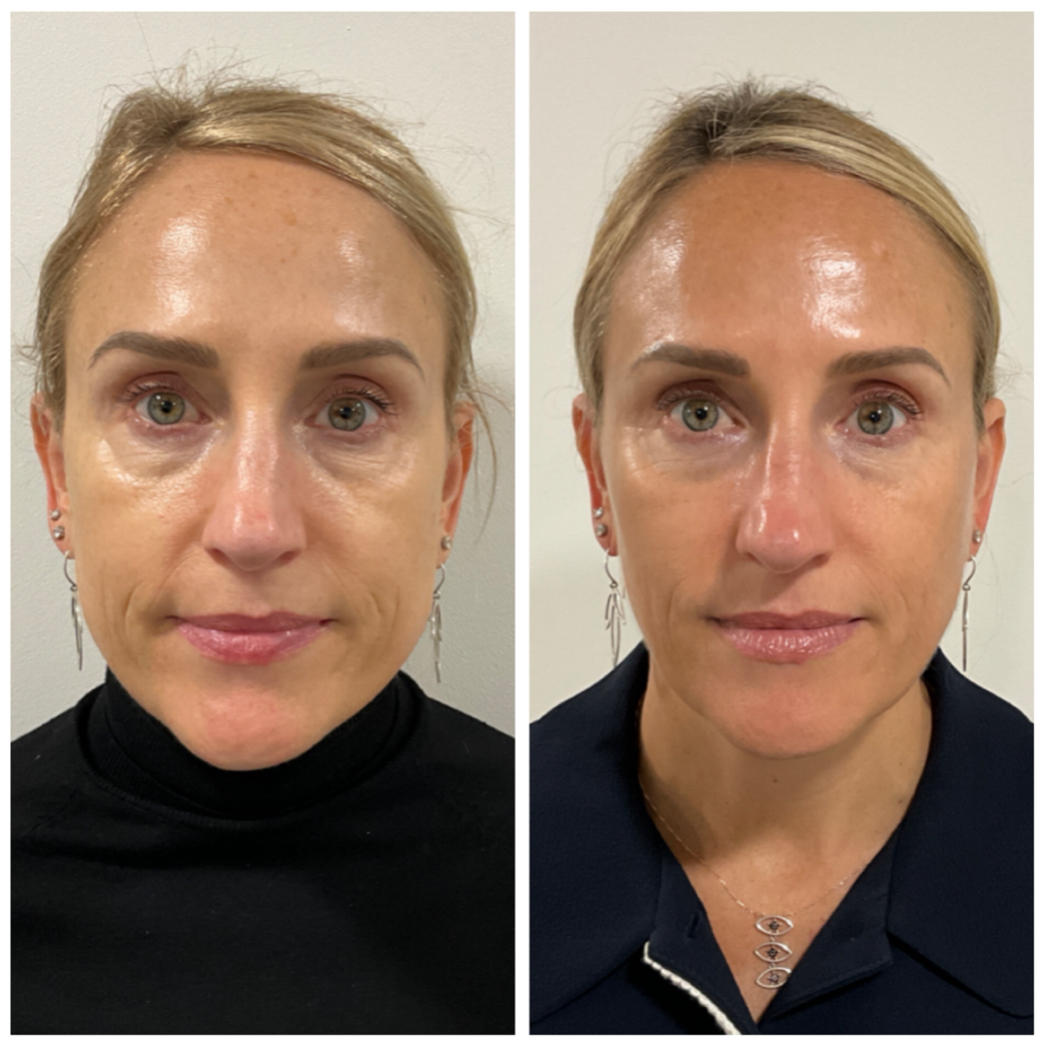
As collagen production increases over the following months, the result gradually improves. Many patients notice that the outcome looks increasingly natural over time as their own tissue replaces the initial product. Results continue to develop for up to three to six months after treatment [4][5].
Unlike some treatments that require a strict post-procedure massage protocol, Ellansé does not typically require this. The spherical, uniform nature of the PCL microspheres means they integrate evenly within the tissue without the risk of uneven distribution associated with some other collagen stimulators [2][3].
Ellansé has a well-established safety record, and both its components – PCL and CMC – are classified as Generally Recognised As Safe (GRAS) by the FDA and carry CE marking in Europe [1][3]. It has been used globally for over 15 years.
As with any injectable treatment, there are risks that every patient should understand before proceeding.
These may include swelling, bruising, and tenderness at the injection sites, which are usually mild and resolve within a few days [1][2].
These can occasionally occur if the product is placed too superficially, if volumes are excessive, or if distribution is uneven. These risks are significantly reduced by correct depth of placement, appropriate dilution, and conservative dosing. This is why technique and clinical experience matter enormously with this product [2][4].
Though uncommon, these can occur, particularly related to changes in particle degradation over time. Correct patient selection, avoiding overcorrection, and spacing treatments appropriately all help to minimise this risk [2].
These are rare but serious, as they are with all injectable treatments. Thorough anatomical knowledge, slow injection technique, and careful aspiration where appropriate are essential safeguards [1][2].
The most important safety consideration with Ellansé – and the one I want every patient to understand clearly – is that it is not reversible in the way that hyaluronic acid fillers are. There is no enzyme equivalent to hyaluronidase that can dissolve PCL.
This makes patient selection, consultation, and clinical precision absolutely fundamental. At the Anti Wrinkle Clinic, I would never treat a patient with Ellansé without a full consultation first, and I would never proceed if I had any doubt about the appropriateness of the treatment for that individual.
Ellansé is one of those treatments that genuinely earns its place in a clinical offering – not because it's new, but because it does something other treatments don't. Its dual-phase mechanism, its strong safety record, and the progressive, natural-looking improvement it delivers make it a clinically meaningful option for the right patient.
If you're considering Ellansé, or simply want to understand whether it might be appropriate for where you are in your skin journey, the best next step is a Face-to-face hour. This dedicated 60-minute consultation gives me the time to properly assess your skin, discuss your goals, and work out an honest, personalised plan – with no pressure to book anything until you're truly ready.
[1] de Melo F, Nicolau P, Piovano L, et al. Recommendations for volume augmentation and rejuvenation of the face and hands with the new generation polycaprolactone-based collagen stimulator (Ellansé®). Clin Cosmet Investig Dermatol. 2017;10:431–440. PMC5685142.
[2] Christen MO, Vercesi F. Polycaprolactone: How a well-known and futuristic polymer has become an innovative collagen-stimulator in esthetics. Clin Cosmet Investig Dermatol. 2020;13:31–48. PMC7065466.
[3] Sinclair Pharma. Ellansé Summary of Product Characteristics and Technical Dossier.
[4] Zuchowska A, et al. Macroscopic and histological effects of polycaprolactone dermal filler in the orofacial region. Cosmetics. 2024;11(4):130. MDPI.
[5] Tavares JP, et al. Pilot study: Efficacy and safety of polycaprolactone collagen stimulator for middle third of the face. Plast Reconstr Surg Glob Open. 2025;13(11):e7285. PMC12594308.
[8] Goldberg D, et al. Efficacy and safety of poly-L-lactic acid in facial aesthetics: a systematic review. Polymers. 2024;16(18):2564. MDPI.
[9] Avelar LET, et al. Unveiling the mechanism: injectable poly-L-lactic acid's evolving role – insights from recent studies. J Cosmet Dermatol. 2025. PMC11743305.
[10] Bernardin A, et al. Advances in poly-L-lactic acid injections for facial and neck rejuvenation. Plast Reconstr Surg Glob Open. 2025. PMC12323926.
Dermal Fillers work by adding volume directly – and once the product is metabolised, the result gradually fades with it. Ellansé works differently.
Yes, it provides an immediate volumising effect through its gel carrier, but at the same time it triggers your own biology to produce new collagen over the months that follow. Over time, the result becomes less dependent on the product and more dependent on your own tissue.
That progressive, biological quality is what sets Ellansé apart – and why, for the right patient, it can deliver results that feel increasingly natural over time.
Not better – different, and meaningfully so. Sculptra is a treatment I use regularly and have a great deal of respect for. It's particularly well suited to patients with more significant volume loss who want gradual, progressive volumetric restoration across the face.
Ellansé is more appropriate when both immediate structural correction and long-term collagen regeneration are needed at the same time – when waiting several months for results to emerge isn't the right fit for the patient or the clinical goal.
The right choice always comes down to an honest assessment of what the face needs.
Ellansé tends to work best for patients who are experiencing structural changes – a loss of facial definition, reduced skin density, or early to moderate signs of volume loss – and who want a result that improves over time rather than one that peaks immediately and then fades.
It's particularly well suited to patients who are thinking about their skin as a long-term investment rather than a quick fix.
Ellansé isn't the right treatment for everyone, and part of my role is to be honest about that. It isn't appropriate for the lips or tear trough area, where a more flexible and reversible product is needed.
It's also not suitable for patients who require the reassurance of reversibility – for example, those who are new to injectables and uncertain about committing to a longer-lasting result.
Certain medical conditions or medications may also mean that treatment needs to be delayed or avoided entirely. All of this is assessed carefully during your consultation.
No – and in fact, one of the reasons I find Ellansé clinically interesting is that it often reduces the need for the kind of volume that can tip into an overfilled appearance.
Because part of the result comes from your own collagen rather than a gel sitting in the tissue, it integrates more naturally with the surrounding structures. The outcome tends to look like a better version of you, rather than a treated version.
You'll see an immediate improvement on the day of treatment as the CMC gel takes effect. Over the following six to eight weeks, that initial result may soften slightly as the gel dissipates – this is completely normal and expected, and I always prepare my patients for it. As collagen production increases over the months that follow, the result gradually improves and deepens. Full results are typically visible at around three to six months.
In terms of longevity, this depends on which variant is used. Ellansé S lasts approximately one year and Ellansé M approximately two years.
At the Anti Wrinkle Clinic, I stock both – and the decision on which is most appropriate will be made together during your consultation.
In many cases, a single session is sufficient to achieve a meaningful result. That said, this depends entirely on the individual – factors such as your age, the degree of collagen loss, skin quality, and the areas being treated all influence how many sessions are most appropriate.
Some patients benefit from a second session to build on an initial result. This will always be discussed openly and honestly during your consultation, and I will never recommend more treatment than is genuinely needed.
No – and this is one of the most important things I want every patient to understand before we proceed.
Unlike hyaluronic acid fillers, which can be dissolved using hyaluronidase if needed, there is no equivalent enzyme that can break down PCL.
Ellansé naturally biodegrades over time, but it cannot be removed on demand. This is precisely why careful consultation, thorough assessment, and clinical precision are non-negotiable with this treatment.
I would never proceed with Ellansé if I had any doubt about its appropriateness for that individual.
As with any injectable treatment, there are risks – and I always make sure my patients understand them clearly before we proceed. Most side effects are mild and temporary: some swelling, redness, or tenderness at the injection sites, which typically settles within a few days.
Less commonly, nodules can form beneath the skin, usually if the product is placed too superficially or in excessive volumes. Inflammatory reactions are uncommon but possible. Vascular complications are rare but serious – and prevented through precise anatomical knowledge, careful technique, and slow injection.
The most important risk to understand is irreversibility. Ellansé cannot be dissolved if you're unhappy with the result. It will biodegrade naturally over time, but there is no quick fix if something doesn't go to plan. This is why I take consultation, patient selection, and clinical precision so seriously with this treatment.
If you have any concerns after treatment, please don't hesitate to contact the clinic on +44 20 3598 7358.
Yes – every treatment at the Anti Wrinkle Clinic starts with a consultation. This is an important step to make sure the treatment you're considering is both suitable and safe for you. During your consultation, I'll take the time to understand your goals, review your medical history, and assess whether Ellansé is the right option for your face at this point in time.
Please note that payment doesn't automatically guarantee a treatment. If anything comes up during your consultation that makes a procedure unsafe or unsuitable, I will explain why and recommend alternative options.
For the first 24 hours, I'd recommend avoiding strenuous exercise, saunas, steam rooms, and anything that generates significant heat. Keep the treated area clean, avoid touching or pressing on it, and go easy with makeup if possible.
Unlike some collagen stimulators, Ellansé does not require a post-treatment massage protocol, so there's no need to worry about that.
For the weeks that follow, daily SPF and good skincare are your best friends – protecting and supporting what we're building together. If you experience any unusual symptoms – pain, persistent swelling, redness, or anything that concerns you – please contact the clinic immediately on +44 20 3598 7358.
All treatments are personally performed by Dr Yiannis – that's me! I'm a fully qualified medical aesthetic practitioner with over 20 years of experience. My academic and clinical background includes:
Over the past 20 years, I have also completed extensive postgraduate training in facial aesthetics, participating in numerous advanced, hands-on training modules both in the UK and across Europe. This includes training delivered by internationally recognised experts in medical aesthetics as well as by the pharmaceutical and medical device companies whose products I use in clinic, ensuring my techniques are up to date, evidence-based, and aligned with the highest safety standards.
Everything that happens at the Anti Wrinkle Clinic, I personally carry out – ensuring consistency, safety, and care from start to finish.
Yes – all injectable treatments at the Anti Wrinkle Clinic are fully regulated under UK medical guidelines. Treatments are prescribed and administered exclusively by Dr Yiannis, following an in-person consultation to confirm suitability. We follow strict clinical and hygiene protocols and source products only from licensed UK pharmacies.
Learn more about our unique consultation process, your Face-to-face hour – a dedicated 60-minute, in-person appointment with Dr Yiannis.
Face-to-face hour