New Patients: Finding the right clinic shouldn't take forever! Click Here

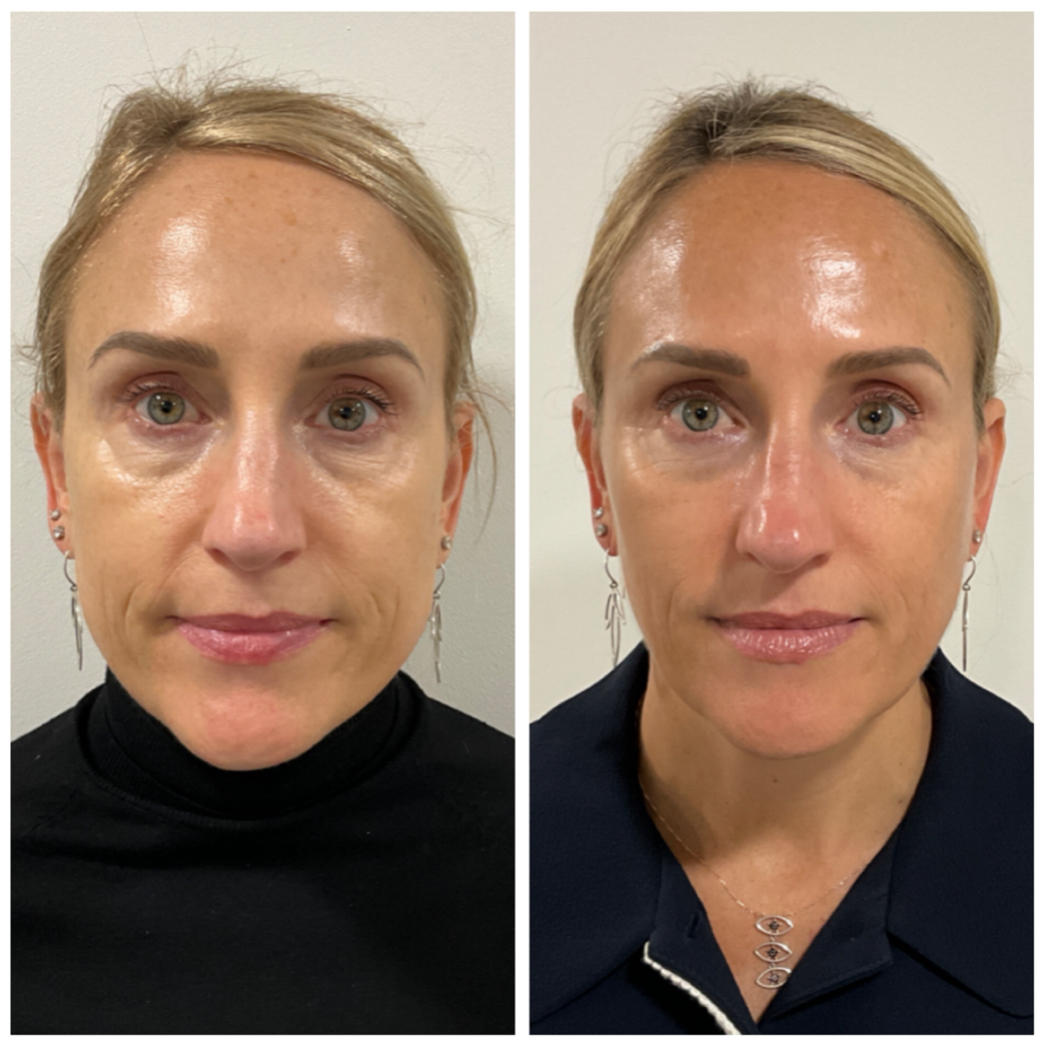
JULÄINE™ explained by Dr Yiannis: its unique composition, how it stimulates collagen, improves skin quality, and when it may be right for you

If you’ve been exploring and considering medical aesthetic treatments, you’ve likely come across a range of options – from skin boosters like Profhilo and Sunekos, to Polynucleotides, and of course Anti-Wrinkle Injections and Dermal Fillers.
Each of these treatments plays a different role in how we address the effects of ageing.
At the Anti Wrinkle Clinic, the shift over the years has been away from relying on a single treatment, and towards understanding how these approaches work together. Instead, I look at the skin more holistically – asking what it needs, and when.
JULÄINE sits within this more modern way of thinking.
But to understand where it fits, we first need to step back and look at what’s actually changing in the skin as we age.
How ageing affects our appearance is often simplified as “volume loss” – but this only tells part of the story. In reality, it’s a mix of skin laxity, collagen and elastin decline, fat redistribution, and changes in texture and tone.
What looks like sagging, hollows, or wrinkles is really the skin and underlying structures slowly losing support, elasticity, and resilience over time
Collagen – the protein that gives our skin its strength, support, and structure – naturally declines with age, dropping by about 1% per year after early adulthood [1]. Over time, this leads to a thinner dermis, reduced elasticity, and a loss of structural integrity within the skin.
At a microscopic level, collagen fibres break down and fibroblasts become less active, reducing the skin’s ability to repair and maintain itself over time [2].
This is often why replacing volume alone does not always produce the natural result patients expect.
If the skin itself has weakened, it cannot respond in the same way. This is where collagen-stimulating treatments become particularly important.
JULÄINE is a new, scientifically validated collagen stimulator based on poly-L-lactic acid (PLLA). The product is developed in Sweden and manufactured by Nordberg Medical, and is designed to regenerate the skin and deliver long-lasting, natural-looking results.
Poly-L-lactic acid (PLLA), a well-studied biocompatible (safe for use in the body) and biodegradable (naturally broken down over time) material, has been used in medicine for decades due to its predictable degradation and safety profile [3].
Rather than creating immediate, dramatic change, JULÄINE works gradually by supporting your body’s own regenerative processes – allowing results to develop in a controlled, natural way over time. By activating fibroblast cells to regenerate healthy collagen in a low-inflammatory way, JULÄINE progressively smoothens wrinkles and tightens the skin.
What sets Julaine apart is the fact Its fοrmula is based on a new unique Lactic Acid based skin bio-activator, which is designed to regenerate – not fill. So, instead of acting as a traditional filler, its unique Lactic Acid based collagen renewal therapy stimulates fibroblasts to produce new collagen over time, gradually improving skin thickness, structure, and resilience [4,5].
Instead of providing immediate, short-lasting volume, JULÄINE improves:
These changes develop progressively over time, which is why the results tend to look natural and consistent.
Although JULÄINE is relatively new to the UK, the science behind it is not new. It builds on decades of experience with PLLA, but refines how that technology behaves in the skin [6].
JULÄINE has already been used in parts of Asia for several years and is now being introduced more widely across Europe, including selected clinics in the UK – including the Anti Wrinkle Clinic [6]. So while it may feel like a new treatment locally, it sits within a well-established category of regenerative aesthetic treatments.
The detail that makes JULÄINE stand out is something most patients wouldn’t even be aware of – the way the material itself has been engineered.
It uses a specialised manufacturing process (often referred to as LASYNPRO™) to create very pure, highly consistent particles. The PLLA particles in JULÄINE are designed to be uniform, smooth, and almost perfectly spherical.
On the surface, this sounds like a small technical detail, but from a clinical perspective, this matters. When particles are more uniform in size and shape, they tend to distribute more evenly within the tissue. This can influence how predictably the product integrates and how smooth the final result appears [6,7].
It also has implications for safety and versatility.
Because of this more refined structure, the product can be used in areas where we would traditionally be more cautious with collagen stimulators – including, in selected cases, more delicate regions such as the under-eye area [6].
Of course, this is always patient-dependent and requires careful assessment, but it does expand how the treatment can be used in experienced hands.
One of the most important points to understand is that no single treatment replaces another – because each serves its own role for the unique needs of each patient.
In clinic, I may use treatments such as Profhilo to improve hydration and elasticity, Sunekos to support the extracellular matrix, or Polynucleotides to assist with repair and inflammation. I often use Anti-Wrinkle Injections to soften expression lines, and Dermal Fillers where structural support is needed.
JULÄINE adds another layer to this.
It focuses more specifically on stimulating collagen and improving the structural quality of the skin over time. That doesn’t make JULÄINE “better” – it simply makes it unique in what it does.
And because every patient’s skin behaves differently, the decision on which treatment to use is always individual. In many cases, the best outcomes come from combining approaches – improving hydration, supporting repair, and stimulating collagen, rather than relying on a single modality.
This is why at my clinic, treatment plans are always personalised and often prove more effective over time.
This is one of the most common questions I get in the clinic, and it’s exactly what I like to see when patients are considering treatment – curiosity.
Both JULÄINE and Sculptra belong to the same family of treatments known as collagen biostimulators. They’re based on PLLA and work by stimulating your own collagen over time, rather than adding instant volume like traditional Dermal Fillers [4,8].
Where they differ is in what we’re trying to achieve.
Sculptra has been around for over 20 years and is particularly effective when the goal is to restore volume and structural support – for example in the cheeks, temples, or areas where the face has become flatter with age.
JULÄINE is a newer evolution of this technology. In practice, I tend to use it more when the focus is on improving skin quality – things like firmness, elasticity, and overall skin strength – without significantly changing facial shape.
So which one is right for you?
It really depends on what type of repair or support your skin needs. If the concern is more structural, Sculptra is usually the better fit. If it’s more about the skin itself, JULÄINE tends to be the more appropriate option.
And quite often, they’re not competing treatments at all – they can work very nicely together as part of a longer-term, more considered plan.
You may have come across the “5-5-5 rule” with other collagen-stimulating treatments like Sculptra – a massage routine (5 minutes, 5 times a day, for 5 days) used to help distribute the product evenly and reduce the risk of nodules [10].
With JULÄINE, this intensive massage protocol is not required.
The product is designed to settle more evenly within the skin, meaning there is less reliance on post-treatment massage to achieve a smooth result [6].
For patients, this makes the treatment more straightforward and easier for you to manage after the procedure.
Immediately after treatment, it’s common for the face to appear slightly fuller.
Not to worry, this is only temporary and not the final result.
This early fullness is largely due to the fluid used to prepare the product and the immediate tissue response. Over the next few days to a week, this settles as the product integrates and the skin returns to its baseline [5].
Over the following weeks and months, collagen production increases, and patients begin to notice improvements in skin firmness, texture, overall skin quality, and subtle structural support.
JULÄINE is performed as a course of treatments rather than a single session.
In most cases:
This spacing allows time for collagen production to begin and for each session to build on the previous one in a controlled way.
In my experience, this type of treatment is best suited to patients who are noticing changes in skin quality rather than simply volume. This may include skin that feels thinner, less elastic, or less resilient than it once did.
It is also well suited to those who are looking for natural, progressive improvement rather than immediate or dramatic change. For many patients, it forms part of a longer-term approach to maintaining skin quality and supporting the ageing process more gradually.
PLLA-based treatments have been studied extensively in aesthetic medicine, with evidence supporting their ability to stimulate collagen production and improve skin quality over time [4,9].
As with any injectable treatment, there are potential side effects, including swelling, bruising, tenderness, and redness at the injection site [9]. These are usually temporary and resolve within a few days.
More significant complications are rare but must always be discussed as part of a proper medical consultation.
This is why assessment, technique, and product selection all matter.
When I assess a patient, I’m not looking for a single solution. At the Anti Wrinkle Clinic, treatments (or concerns) are never considered in isolation, and the focus is always on how the skin behaves as a whole.
That includes its quality, structure, and how it responds over time.
JULÄINE fits into this as a way of strengthening the skin itself — improving its thickness and function over time.
And when the skin improves, everything else tends to look better and last longer.
JULÄINE represents an ultra-refined approach to collagen stimulation.
It’s not about adding volume or chasing quick results. It builds on a well-established mechanism but introduces improvements in how the product behaves within the skin.
JULÄINE offers a gradual, natural, and biologically driven way to improve skin quality over time. For the right patient, it can be a very powerful addition to a well-structured, long-term treatment plan.
If you’d like to explore whether JULÄINE – or any of the treatments we offer – is suitable for you, the best place to start is with a Face-to-Face Hour consultation.
This gives us the time to properly assess your skin, understand your goals, and build a treatment plan that is tailored specifically to you.
[1] Shuster S, Black MM, McVitie E. The influence of age and sex on skin thickness, skin collagen and density. Br J Dermatol. 1975.
[2] Fisher GJ et al. Dermal fibroblast aging and extracellular matrix changes. J Invest Dermatol / review data.
[3] Middleton JC, Tipton AJ. Synthetic biodegradable polymers as medical devices. Biomaterials. 2000.
[4] Ao YJ et al. Application of poly-L-lactic acid for skin rejuvenation and regeneration. 2024 review.
[5] Narins RS et al. Injectable PLLA clinical outcomes study. Aesthetic Surg J.
[6] Nordberg Medical. JULÄINE product information and manufacturer data.
[7] Lam SM et al. Injectable particle characteristics and safety considerations.
[8] PLLA consensus guidelines / clinical use overview (e.g. Dermatol Surg / J Cosmet Dermatol).
[9] Signori R et al. Systematic review of PLLA safety and efficacy. 2024.
[10] Sculptra official IFU / prescribing information and aftercare guidance.
This is one of the most common questions I get in the clinic.
JULÄINE doesn’t behave like a traditional filler. It doesn’t sit in the skin and create volume in the same way. You may notice a little bit of fullness immediately after treatment, but that settles quite quickly.
The real effect comes later – as your skin starts to produce more collagen, it becomes thicker, stronger, and more supportive. So instead of “adding volume,” we’re improving how the skin behaves.
Soon after treatment, you may notice improvement in the overall quality and radiance of your skin. Cosmetic results appear progressively between 2 and 4 months after the treatment for the majority of patients, and the effects can last up to 12 months.
What’s important to understand is that this isn’t just about how long the product “lasts” – it’s about the collagen your body has produced during that time. That’s what gives the treatment its longer-term benefit.
Yes – when used appropriately, it has a very good safety profile.
JULÄINE is CE marked, which means it meets European standards for safety and quality. It’s also manufactured under strict conditions, with full traceability of each batch.
That said, like any injectable treatment, safety doesn’t just come from the product — it comes from how it’s used.
Proper assessment, correct technique, and experience all matter. That’s why these treatments should always be carried out by a qualified medical professional.
Possible side effects are related to the injection site including redness, short-term
pain and short-term bleeding at the site of needle tip penetration during injection,
which are generally relieved within a few days.
If you experience any unusual symptoms – such as significant swelling, persistent pain, or other concerns – please contact the clinic immediately on +44 20 3598 7358.
Most patients tolerate the treatment very well.
You’ll feel the injections, of course, but it’s usually described as mild and very manageable. Any discomfort tends to be brief, and most people are able to carry on with their day afterwards without any issues.
Aftercare is relatively straightforward – and you don’t have to follow the ‘5-5-5’ rule!
I usually recommend some gentle massage of the area in the days following treatment, just to help everything settle nicely. It’s also sensible to avoid strong sun exposure or extreme temperatures until any initial redness or swelling has settled.
Nothing complicated – but rest assured, I’ll always guide you based on your treatment.
Yes – and this is really the core of what it does.
As the product breaks down, it stimulates the skin to produce new collagen. But beyond that, it also influences how the skin functions more broadly.
Over time, the skin becomes stronger, more resilient, and better able to support itself.
That’s why the results tend to look natural – because they’re coming from your own tissue improving, rather than something being added on top.
This is a very sensible question, especially as both treatments work by stimulating your own collagen over time.
In general, it’s often suggested to wait around 3–6 months after Sculptra before introducing another collagen-stimulating treatment, to allow the initial response to settle.
In my clinic, I tend to take a more conservative approach and usually recommend waiting closer to 12 months.
This isn’t because the two treatments can’t be combined, but because Sculptra continues to stimulate collagen for several months. Allowing that process to fully stabilise gives us a clearer picture of how your skin has responded and helps avoid over-treatment.
As always, the exact timing depends on the individual and your overall treatment plan, which is why a proper review is important before moving forward.
As with any treatment, it’s not suitable for everyone.
For example, we would avoid treating if there’s active infection or inflammation in the skin, or if there’s a known allergy to any of the ingredients.
Certain medical conditions, such as bleeding disorders, or a tendency to form keloid scars, also need to be considered carefully.
And as a general rule, I wouldn’t treat it during pregnancy or while breastfeeding.
This is why your Face-to-face hour consultation is so important – it allows me to assess everything properly before we make any decisions.
JULÄINE is made up of three key components, each with a specific role.
The main one is poly-L-lactic acid (PLLA), which is the active ingredient responsible for stimulating collagen production. Alongside that, there’s a suspending agent that helps keep the particles evenly distributed, and mannitol, which helps with how the product is prepared and delivered into the skin.
From a patient point of view, what matters is that this combination allows the product to sit and behave in the skin in a very controlled and consistent way.
Lactic acid is something your body naturally produces – most people associate it with exercise, but it also plays a role at a cellular level.
In treatments like JULÄINE, the PLLA gradually breaks down into lactic acid over time. That’s important, because lactic acid acts as a signalling molecule in the skin.
In simple terms, it helps “switch on” the cells responsible for producing collagen.
That’s why this treatment works gradually – you’re not just placing something into the skin, you’re encouraging the skin to start working differently.
Yes – every treatment at the Anti Wrinkle Clinic starts with a consultation. This is an important step to make sure the treatment you’re considering is both suitable and safe for you. During your consultation, I’ll take the time to understand your goals, review your medical history, and discuss what’s best for your skin.
Please note that payment doesn’t automatically guarantee a treatment. If anything comes up during your consultation that makes a procedure unsafe or unsuitable, I will explain why and recommend alternative options.
All treatments are personally performed by Dr Yiannis (that’s me!), a fully qualified medical aesthetic practitioner with over 20 years of experience. My academic and clinical background includes:
Over the past 20 years, I have also completed extensive postgraduate training in facial aesthetics, participating in numerous advanced, hands-on training modules both in the UK and across Europe. This includes training delivered by internationally recognised experts in medical aesthetics as well as by the pharmaceutical and medical device companies whose products I use in the clinic, ensuring my techniques are up to date, evidence-based, and aligned with the highest safety standards.
Everything that happens at the Anti Wrinkle Clinic, I personally carry out – ensuring consistency, safety, and care from start to finish.
Yes – all injectable treatments at the Anti Wrinkle Clinic are fully regulated under UK medical guidelines. Treatments are prescribed and administered exclusively by Dr Yiannis following an in-person consultation to confirm suitability.
Rest assured, we follow strict clinical and hygiene protocols and source products only from licensed UK pharmacies.
Learn more about our unique consultation process, your Face-to-face hour – a dedicated 60-minute, in-person appointment with Dr Yiannis.
Face-to-face hour