New Patients: Finding the right clinic shouldn't take forever! Click Here

Sculptra benefits, safety, and expected results with comparisons to Dermal Fillers, Profhilo, Sunekos, Polynucleotides, and Anti-Wrinkle Injections
When people think about aesthetic treatments, they often imagine one of two things. Either treatments that relax facial muscles to reduce wrinkles or treatments that add volume to restore shape and contour.
Sculptra works quite differently, and that difference is precisely what makes it such a powerful treatment.
Rather than relaxing muscles or adding immediate volume, Sculptra works by stimulating the body to gradually produce new collagen – a process that helps rebuild some of the deeper structural framework that supports the skin over time [1][2].
As we age, the body gradually produces less collagen – one of the key proteins responsible for maintaining skin strength, elasticity, and support. Over time, this gradual decline contributes to thinner skin, softer facial contours, and a loss of firmness.
At my clinic, patients who benefit most from Sculptra are usually those who feel their face has lost some firmness or structure but prefer subtle, progressive improvements rather than dramatic or immediate changes.
If you’re considering or curious about Sculptra, this guide will explain what makes it unique, what you can expect, and how it compares with other treatments I offer at the Anti Wrinkle Clinic.
Sculptra is an injectable treatment designed to stimulate collagen production and gradually improve facial structure and skin firmness.
In my clinical practice, I primarily use Sculptra to improve structural skin support.
The active ingredient in Sculptra is poly-L-lactic acid (PLLA). This biocompatible substance has been used in medicine for many years, including in dissolvable surgical stitches. In aesthetic treatments, it works as a collagen stimulator rather than as a traditional filler [1].
When a substance is described as biocompatible, it means the body recognises it as safe and not foreign, and can gradually break it down naturally. In the case of Sculptra, the microscopic PLLA particles slowly dissolve over time while encouraging the skin to produce new collagen.
Collagen provides support, strength, and elasticity, helping the face maintain its natural shape. From our mid-twenties onwards, the body naturally produces a little less of it each year.
Over time this contributes to several changes we commonly associate with ageing:
Sculptra works by encouraging – and in a way ‘reminding’ – the body to rebuild some of this lost collagen, gradually strengthening the skin’s underlying collagen framework rather than simply adding surface volume [1][2].
Because the improvement comes from your own collagen rather than an injected gel, the results tend to develop slowly and blend naturally with the rest of the face. To me, this is one of the most amazing aspects of the treatment.
Unlike traditional Dermal Fillers, Sculptra does not create immediate volume by physically filling an area.
Instead, it acts as what we call a collagen biostimulator. After it is injected into deeper layers of the skin, the PLLA particles stimulate fibroblasts – the cells responsible for producing collagen.
Over time, this process stimulates the production of new collagen fibres, particularly type I and type III collagen, which form key components of the structural scaffolding that helps maintain firmness and resilience within the skin.
At the same time, the PLLA particles slowly dissolve and are absorbed by the body. What remains is the new collagen your skin has produced in response to the treatment.
This is one of the reasons Sculptra is often described as a regenerative treatment. Rather than simply filling an area temporarily, it stimulates a biological process that allows the skin to rebuild part of its own structural support.
One of the first things I explain to patients considering Sculptra is that the results do not appear immediately. This treatment is more of a marathon than a sprint.
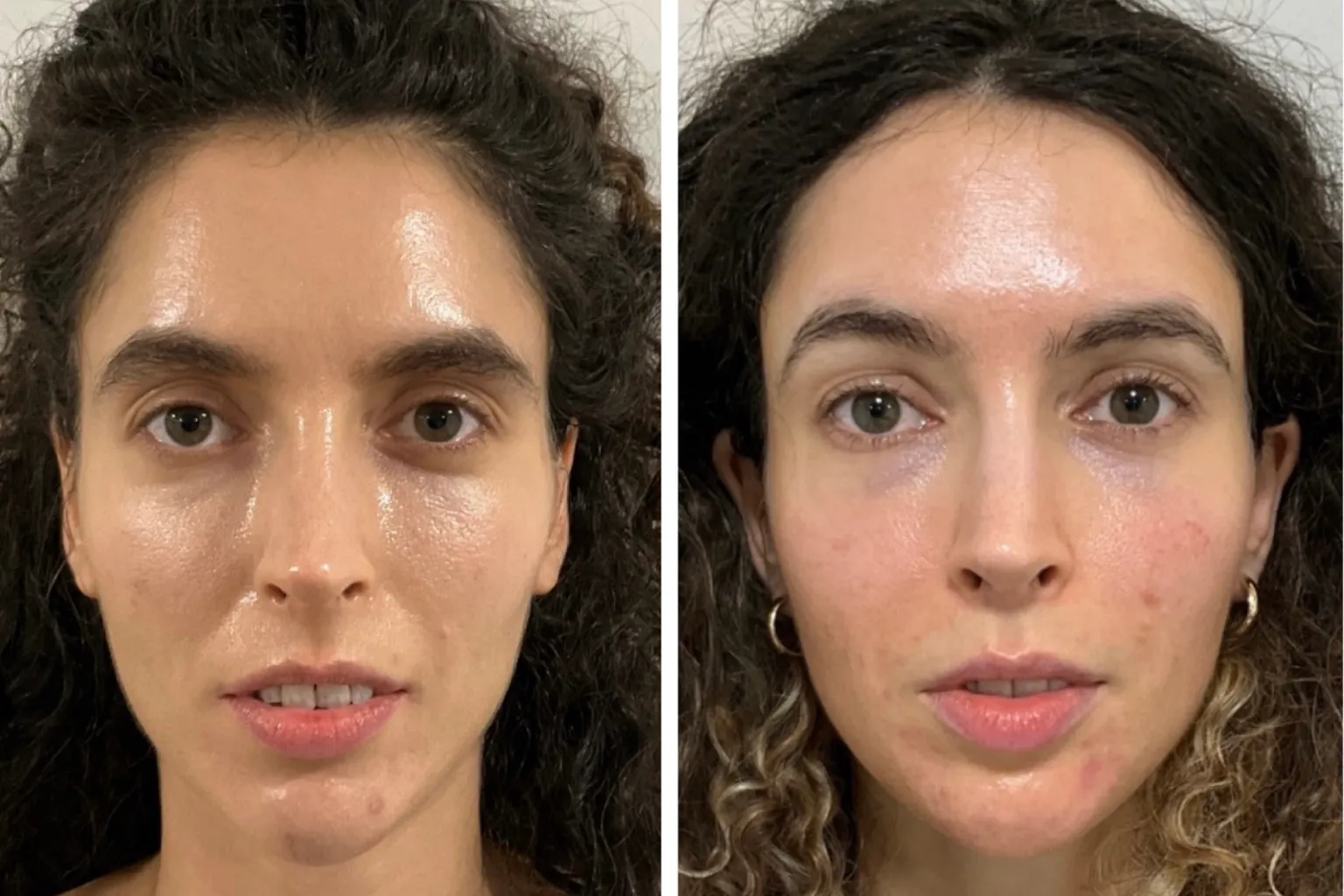
The first visible signs of collagen stimulation typically begin to appear around three to four weeks after treatment, with continued improvement developing over the following three to six months as new collagen fibres mature.
The changes are usually subtle but meaningful. Patients often notice that:
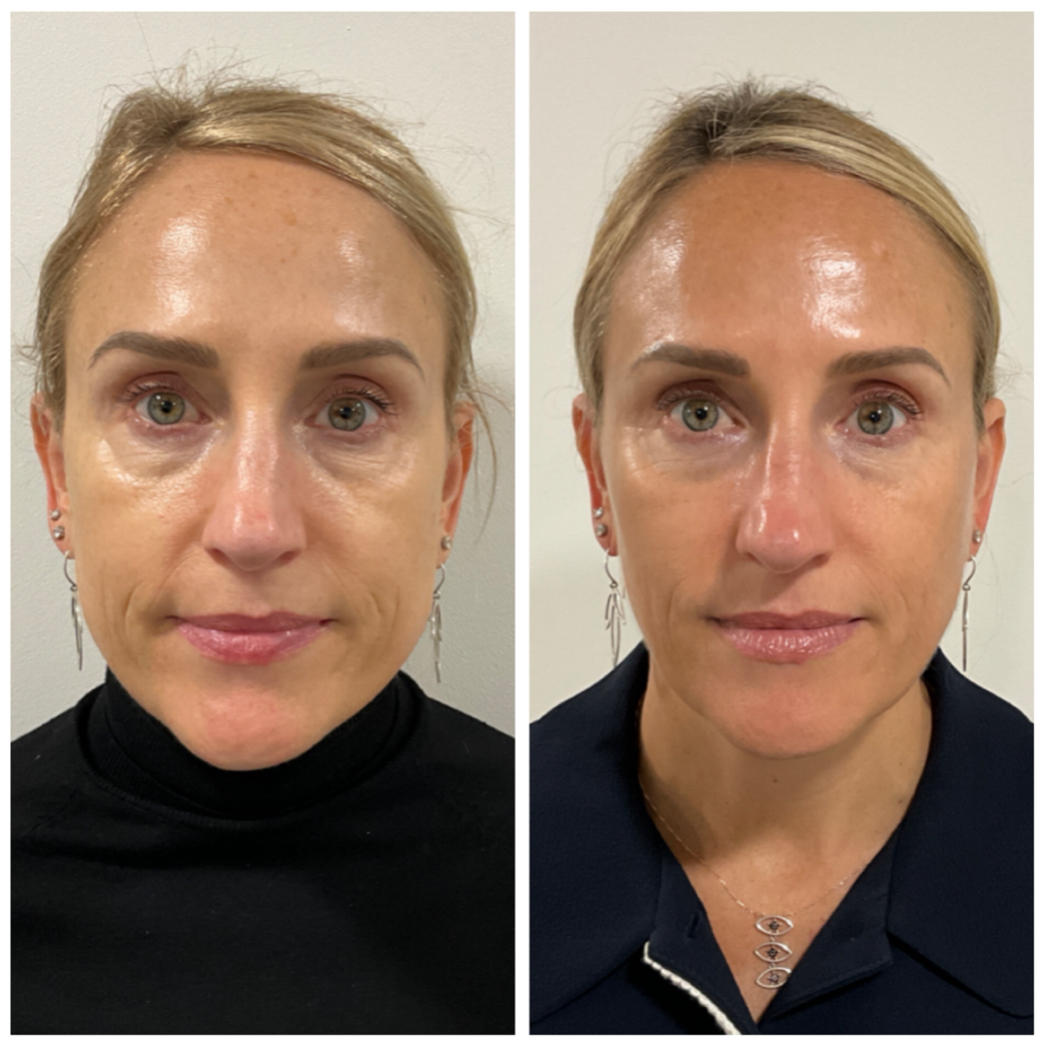
Because these changes happen gradually, the results tend to look very natural. Patients often tell me that friends comment they look well rested or refreshed without realising that they have had treatment.
Another important difference between Sculptra and many other injectable treatments is how long the results can last.
Because Sculptra stimulates your own collagen production, the improvements do not depend on a temporary injected product remaining in the skin. Clinical studies suggest that results can last up to two years (or sometimes longer after a full treatment course) [2].
Of course, the natural ageing process continues and collagen production will gradually decline again over time. For this reason, some of my patients choose to have occasional maintenance treatments.
Because Sculptra works by stimulating your own collagen production, the improvements can continue long after the original product has dissolved.
Sculptra is most commonly used to improve overall facial structure and volume loss rather than very small wrinkles.
Common treatment areas include:
Rather than targeting individual lines, Sculptra works best when used to restore overall structural balance and collagen support within the face. By improving the underlying collagen framework, it can help the face appear firmer and more supported over time.
In selected patients, Sculptra can also be used in other areas of the body where collagen support has declined, including the neck and hands. In these areas, the treatment helps gradually improve skin thickness, texture, and overall skin quality.
Sculptra can be performed as a single treatment session or as a course of treatments, depending on the individual patient.
In younger patients, one treatment session is often sufficient to stimulate noticeable improvement. For most patients, however, two or three sessions are typically recommended in order to gradually build collagen and restore structural support within the skin.
When multiple sessions are required, they are usually spaced six to eight weeks apart to allow the biological process of collagen stimulation to begin before the next treatment.
Immediately after treatment, the face often appears temporarily fuller due to the sterile water used to prepare the product.
This settles over the following few days, after which the face usually returns to its baseline appearance. The visible improvements then develop gradually as collagen production increases over the following months.
After treatment, I ask all my patients to follow the manufacturer’s recommended Sculptra massage protocol, commonly known as the “5-5-5 rule.” This involves massaging the treated areas for five minutes, five times per day, for five days to help distribute the product evenly beneath the skin as the collagen stimulation process begins.
Most patients aren’t aware of the different types of treatments available and the benefits they offer. That’s why I want to showcase how Sculptra compares with other more commonly booked treatments at my clinic. Although these are injectable treatments like Sculptra, they work in very different ways.
If you’re considering treatment and are interested in booking your initial Face-to-face hour consultation with me, understanding the differences between your options will help in our discussion of deciding which option may suit your goals best.
Dermal Fillers are hyaluronic acid injectables that restore volume by replenishing areas where fat deposits have diminished over time. As we age, the natural fat pads of the face gradually shrink and shift, which contributes to hollowing and changes in facial contour.
Dermal fillers are designed to replace this lost volume and restore contour in areas such as the cheeks, jawline, lips, or deeper facial folds [3][4].
Sculptra works very differently. Rather than replacing lost volume directly, it stimulates the skin to gradually rebuild structural collagen over time.
While Dermal Fillers provide immediate volume restoration, Sculptra gradually improves the skin’s internal support structure, allowing facial contours to become stronger and better supported over time.
Profhilo is a treatment designed primarily to improve skin quality rather than restore volume.
It contains one of the highest concentrations of hyaluronic acid used in injectable treatments and is classified as a bioremodelling treatment. This means that it spreads beneath the skin and stimulates biological processes that improve skin hydration, elasticity, and tissue quality.
Profhilo has been shown to stimulate the production of type I, III, IV and VII collagen as well as elastin within the skin, helping improve elasticity and overall skin texture [5][6]. Unlike Sculptra, Profhilo does not aim to restore structural support or facial contour.
While Sculptra focuses primarily on rebuilding deeper structural collagen, Profhilo works more as a skin quality treatment that improves hydration and tissue elasticity.
Polynucleotides are regenerative injectable treatments derived from highly purified DNA fragments.
These molecules act as powerful antioxidants within the skin and help support cellular repair, tissue regeneration, and hydration. They stimulate fibroblast activity and promote the production of collagen and elastin while also improving the skin’s ability to repair itself [7][8].
Because of these properties, Polynucleotides can improve several aspects of skin health simultaneously, including thickness, brightness, elasticity, and overall texture.
They are also particularly useful in delicate areas such as the under-eye region, where they may help improve concerns such as hollows, dark circles, skin thinning, and early under-eye bags.
Compared with Sculptra – which focuses primarily on restoring deeper collagen structure – Polynucleotides work more broadly as a regenerative skin treatment.
Sunekos is a regenerative injectable treatment that combines hyaluronic acid with a carefully balanced mixture of amino acids.
This combination is designed to stimulate fibroblasts and promote the production of key structural components of the extracellular matrix (ECM), including type I, III, IV and VII collagen, elastin, and fibronectin [9][10][11].
Rather than creating volume, Sunekos works by supporting the physiological regeneration of the extracellular matrix – the network of structural proteins that gives the skin its elasticity and resilience.
Sunekos is commonly used to improve fine lines, skin elasticity, and overall skin quality. It can be used in several treatment areas including the face, neck, and under-eye area, and specific formulations are also designed for areas such as the hands, body, and even cellulite treatment.
Compared with Sculptra, which primarily stimulates collagen production to rebuild structural support within the skin, Sunekos focuses more broadly on improving ECM regeneration, skin elasticity, and tissue quality.
Anti Wrinkle Injections work in a completely different way from Sculptra. They contain botulinum toxin type A, which temporarily relaxes the muscles responsible for expression lines.
By reducing muscle movement, Anti Wrinkle Injections soften dynamic wrinkles in areas such as the forehead, frown lines, and crow’s feet [12][13]. Their primary effect is therefore on muscle activity rather than on the structure or quality of the skin itself.
Because the two treatments work at different levels, they often complement each other very well. Anti Wrinkle Injections soften movement lines, while Sculptra rebuilds deeper support within the skin.
At the Anti Wrinkle Clinic, my approach to aesthetic medicine recognises that facial ageing occurs across several layers of the face. It is not just about wrinkles appearing on the surface of the skin. Changes occur in the muscles, the skin itself, the deeper structural support of the face, and the overall quality of the tissue.
Because of this, treating a single concern in isolation rarely produces the most natural results. Instead, the goal is often to support different layers of the face in a balanced way so that improvements look subtle, harmonious, and appropriate for each individual.
In many treatment plans, different treatments play different roles:
Within this broader treatment approach, Sculptra plays a particularly important role. By stimulating collagen and strengthening the skin’s underlying support, it helps address the deeper structural changes that occur as we age.
When used alongside treatments that improve skin quality, restore volume, or soften muscle movement, Sculptra can help create results that look balanced, natural, and long-lasting.
As always, every patient I see receives a personalised treatment plan. Each face is unique, and factors such as skin quality, facial structure, lifestyle, and individual goals all influence which treatments may be most appropriate.
Sculptra is a unique injectable treatment because it works by stimulating the body’s own collagen production rather than simply adding volume or relaxing muscles. By gradually rebuilding the deeper structural framework of the skin, it allows facial support and firmness to improve progressively over time.
For patients who prefer subtle, progressive improvements and a regenerative approach to ageing, Sculptra can be a powerful treatment option.
If you would like to explore whether Sculptra may be suitable for you, I would be delighted to guide you through your options during a Face-to-face hour consultation.
[1] Vleggaar D, Fitzgerald R. J Cosmet Laser Ther. 2008.
[2] Goldberg DJ. Plast Reconstr Surg. 2010.
[3] Sundaram H et al. Plast Reconstr Surg. 2015.
[4] Tezel A, Fredrickson G. J Cosmet Laser Ther. 2008.
[5] Lacarrubba F et al. J Cosmet Dermatol. 2020.
[6] Philipp-Dormston WG et al. Clin Cosmet Investig Dermatol. 2021.
[7] Chernoff WG et al. J Drugs Dermatol. 2023.
[8] Kim J et al. Int J Mol Sci. 2021.
[9] Nobile V et al. Clin Cosmet Investig Dermatol. 2020.
[10] Polak SH et al. J Cosmet Dermatol. 2019.
[11] Zerbinati N et al. J Biol Regul Homeost Agents. 2018.
[12] Carruthers A, Carruthers J. Dermatol Surg. 1998.
[13] Hexsel D et al. Clin Dermatol. 2011.
When performed by a trained medical injector (like myself), Sculptra is considered a safe and well-established treatment. Poly-L-lactic acid has been used in medical applications for many years, and its safety profile is well documented in clinical studies. Sculptra is also both FDA-approved in the United States and CE-marked in Europe, meaning it is legally authorised for medical aesthetic use in both regions.
As with any injectable treatment, safety begins with careful patient selection, correct technique, and using appropriate medical-grade products. This is exactly why every patient at the Anti Wrinkle Clinic undergoes a full consultation before treatment.
Most patients benefit from a short course of about two to three Sculptra sessions spaced six to eight weeks apart. In some cases – particularly in younger patients with early signs of collagen decline – a single treatment session may be enough to produce noticeable improvement.
The exact number of vials used depends on factors such as your age, skin quality, and how much collagen support the face has lost over time.
As a very general guide:
Please note that the above are only general guidelines, and every face is different. During your consultation, I’ll assess your facial structure, skin quality, and treatment goals to decide what would be most appropriate for you.
Because Sculptra works by stimulating your own collagen production, results develop gradually rather than immediately. Most patients begin to notice subtle improvements after about four to six weeks, with continued changes developing over the following months as collagen production increases.
Clinical studies suggest that the results of Sculptra can last up to two years or sometimes longer after a full course of treatment.
This is because the improvement comes from collagen your own body produces rather than from a temporary filler material. As collagen naturally continues to decline with age, the effects of Sculptra gradually soften over time.
Sculptra works very differently from treatments that provide instant results. Rather than adding immediate volume, it stimulates your skin to gradually produce new collagen.
This process takes time. Performing treatment in stages allows the skin to respond naturally to the collagen stimulation and ensures results remain subtle and balanced.
Sculptra is commonly used to improve overall facial structure and areas where collagen loss has contributed to volume reduction.
Common treatment areas include:
Sculptra can also be used to improve skin quality and collagen support in other areas of the body, including the neck and hands.
It is important to note that Sculptra is not typically injected directly into areas such as the nasolabial folds, marionette lines, jowls, jawline, forehead, nose, or under-eye region, as this can sometimes create a heavier or less natural appearance. Careful placement in appropriate structural areas helps achieve more balanced and natural-looking results.
Not at all. One of the reasons patients choose Sculptra is because the results develop gradually and look very natural.
Unlike traditional fillers, Sculptra does not simply add volume immediately. Instead, it encourages the skin to rebuild its own collagen over time. This means improvements tend to be subtle and progressive rather than dramatic.
Immediately after treatment, the face may appear slightly fuller due to the fluid used to prepare the product. This temporary effect settles over the following few days as the fluid is absorbed by the body.
Sculptra is generally a comfortable treatment and requires minimal downtime. The treatment is typically performed using a cannula, which means just one small entry point per treatment area.
Using this technique, the product is carefully placed beneath the skin in areas where structural support and collagen stimulation are desired. Cannula techniques can help reduce the likelihood of bruising and minimise trauma to surrounding tissues.
For additional comfort, a topical anaesthetic is applied before treatment. The Sculptra solution itself is also mixed with lidocaine and sterile water, which helps further improve comfort during the procedure.
For the first 24 hours, I recommend avoiding strenuous exercise, saunas, steam rooms, and hot yoga for the rest of the day.
I also advise all my patients to follow the manufacturer’s recommended massage protocol for Sculptra, commonly known as the “5-5-5 rule.” This guideline comes directly from the manufacturer and involves gently massaging the treated areas for five minutes, five times per day, for five days after treatment.
For the following 1–2 weeks, I would recommend avoiding facials, peels, or microneedling. Daily SPF (30–50) and good skincare will help support the results of your treatment.
If you experience any unusual symptoms – such as pain, redness, swelling, or itching – please contact the clinic immediately on +44 20 3598 7358.
Sculptra is CE-marked and regulated for medical aesthetic use in the UK and has been used safely worldwide for many years.
Like any injectable treatment, some temporary side effects may occur. These may include mild swelling, redness, bruising, or tenderness at the injection sites. These effects usually settle within a few days.
In rare cases, small lumps (nodules) may develop beneath the skin. These occur in about 0.4% of cases and are typically temporary and manageable. Following the recommended massage protocol after treatment significantly reduces the likelihood of this occurring.
If you experience any unusual symptoms – such as significant swelling, persistent pain, or other concerns – please contact the clinic immediately on +44 20 3598 7358.
Sculptra may not be suitable if you are pregnant or breastfeeding, have an active skin infection in the treatment area, or have known allergies to any of the ingredients.
Certain medical conditions or medications may also require treatment to be delayed. All of these factors are carefully reviewed during your consultation to ensure treatment is safe for you.
Yes – every treatment at the Anti Wrinkle Clinic starts with a consultation. This is an important step to make sure the treatment you’re considering is both suitable and safe for you. During your consultation, I’ll take the time to understand your goals, review your medical history, and discuss what’s best for your skin.
Please note that payment doesn’t automatically guarantee a treatment. If anything comes up during your consultation that makes a procedure unsafe or unsuitable, I will explain why and recommend alternative options.
All treatments are personally performed by Dr Yiannis (that’s me!), a fully qualified medical aesthetic practitioner with over 20 years of experience. My academic and clinical background includes:
Over the past 20 years, I have also completed extensive postgraduate training in facial aesthetics, participating in numerous advanced, hands-on training modules both in the UK and across Europe. This includes training delivered by internationally recognised experts in medical aesthetics as well as by the pharmaceutical and medical device companies whose products I use in clinic, ensuring my techniques are up to date, evidence-based, and aligned with the highest safety standards.
Everything that happens at the Anti Wrinkle Clinic, I personally carry out – ensuring consistency, safety, and care from start to finish.
Yes – all injectable treatments at the Anti Wrinkle Clinic are fully regulated under UK medical guidelines. Treatments are prescribed and administered exclusively by Dr Yiannis following an in-person consultation to confirm suitability.
Rest assured, we follow strict clinical and hygiene protocols and source products only from licensed UK pharmacies.
Learn more about our unique consultation process, your Face-to-face hour – a dedicated 60-minute, in-person appointment with Dr Yiannis.
Face-to-face hour