New Patients: Finding the right clinic shouldn't take forever! Click Here

Dr Yiannis explains how Radiesse works, its three treatment forms, and how it compares to Sculptra, Ellanssé, Profhilo and Dermal Fillers, and more.
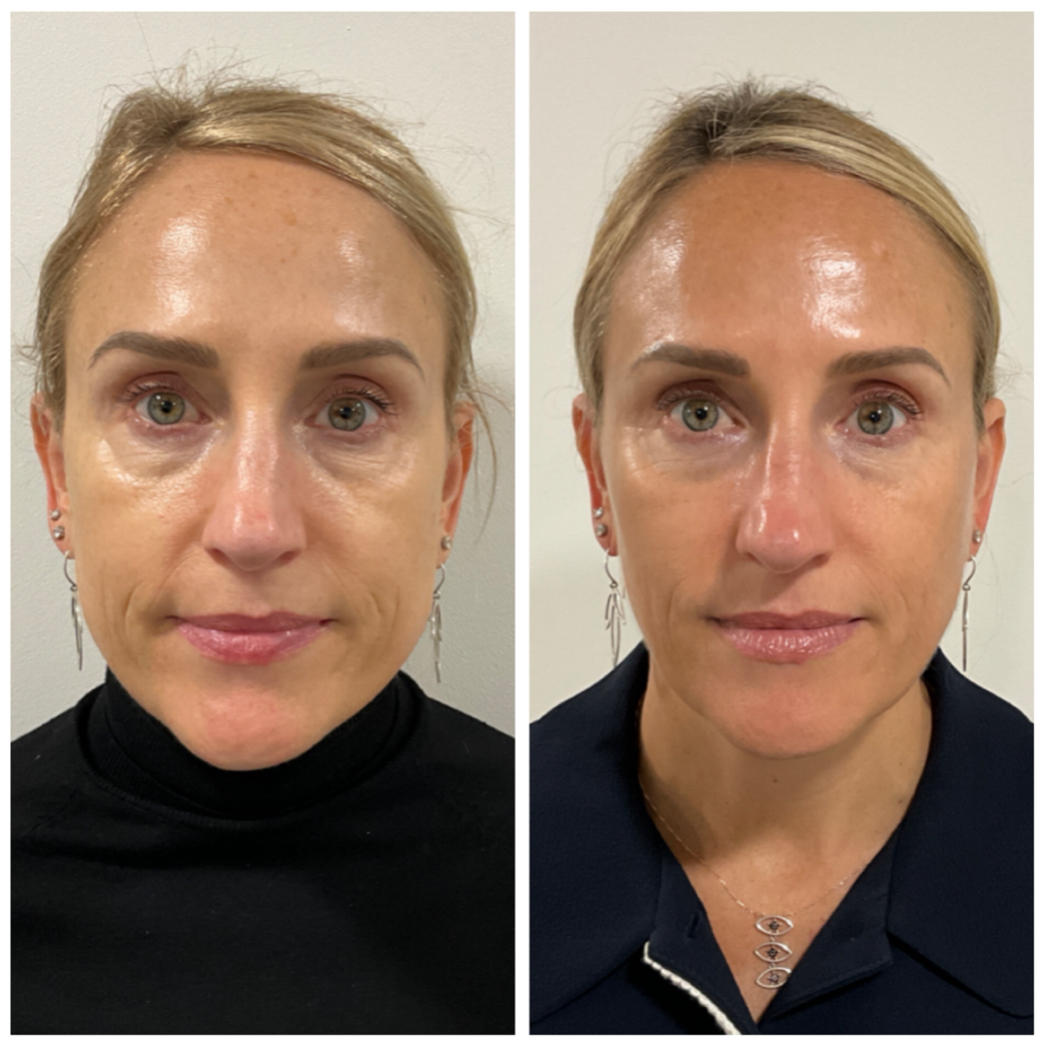
Most injectable treatments do one thing well. You choose them for a specific goal – volume, hydration, collagen stimulation – and they deliver on that.
Radiesse is different. Depending on how it’s prepared, it can restore definition to the face, improve skin firmness across the neck or décolletage, or combine with hyaluronic acid filler to deliver both an immediate result and longer-term collagen stimulation.
The same product, used in three different ways, for three genuinely different clinical goals.
That flexibility is what makes Radiesse one of the most interesting treatments I’ve added to the clinic – and also one of the most misunderstood. It’s often described simply as a filler, but that only tells part of the story. This guide is here to help tell the rest of it.
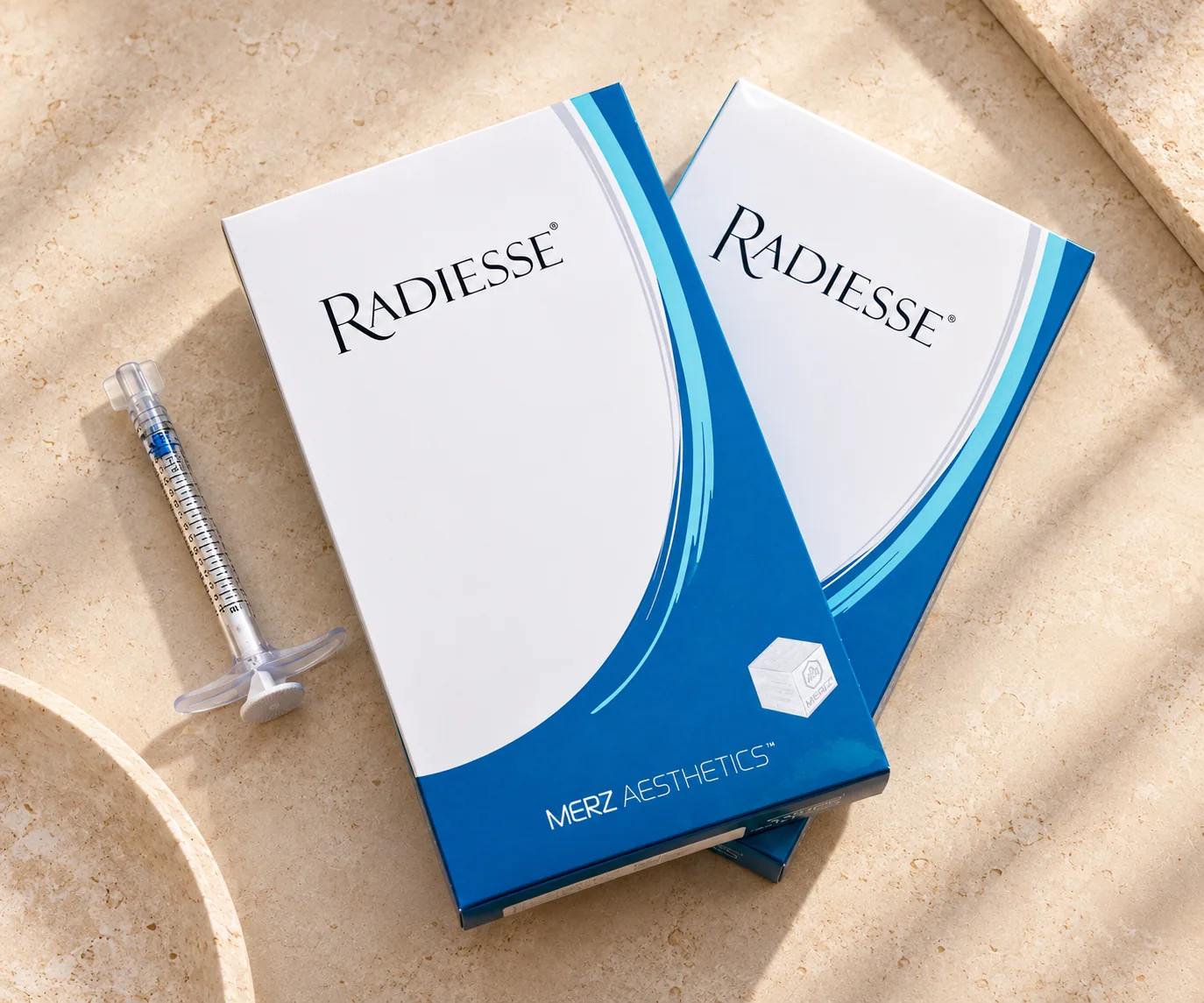
Radiesse is a collagen-stimulating injectable made by Merz, built around calcium hydroxylapatite – a mineral-like compound that occurs naturally in the body, most commonly in bones and teeth. In Radiesse, a synthetic form of this compound is suspended in a smooth gel carrier, creating an injectable that works across two distinct phases [1].
Radiesse has one of the longest clinical histories among collagen-stimulating injectables. It was originally developed as a volumising injectable for deeper facial folds and areas of soft tissue loss. Over time, as clinicians began to understand its biostimulatory properties more fully, its role expanded significantly.
Today, Radiesse is used not only for facial structure and definition, but also – in diluted form – to improve skin quality across the neck, décolletage, and hands. That evolution reflects a broader shift in aesthetic medicine. The focus is no longer only on filling lines, but on restoring tissue quality and supporting the skin’s own regenerative capacity [1][2].
When first injected, the gel carrier provides immediate structural support – you can see a visible difference straight away. Over the weeks and months that follow, the calcium hydroxylapatite microspheres stimulate fibroblasts in the surrounding tissue.
Fibroblasts are the cells responsible for producing collagen, and when they’re activated through direct contact with the microspheres, the skin gradually becomes firmer, denser, and more resilient from within [2][3][12].
This means the result you see on the day isn’t the final result!
The improvement continues to develop as your own biology responds – and that’s what sets Radiesse apart from a traditional filler. Over time, the gel carrier is naturally absorbed, and what remains is improved tissue that your own skin has helped to build [4].
One of the most important things to understand about Radiesse is that it isn’t used the same way for every patient. Depending on what we’re trying to achieve, it can be prepared and applied in three distinct ways.
Neat Radiesse is the product used as standard, without dilution. This is the structural form. It’s what I use when the goal is to restore definition to the cheeks, jawline, chin, or lower face. The gel provides an immediate lift and contour, while the microspheres continue stimulating collagen in the weeks and months that follow. For patients who feel their face has lost its shape or definition, this is often where we start [1].
Hyperdiluted Radiesse is a different approach entirely. The product is mixed with saline and local anaesthetic to create a thinner, more spreadable version that can be delivered across a broader area beneath the skin. In this form, Radiesse isn’t adding volume – it’s improving skin quality. It stimulates collagen across a wider surface, making it particularly well-suited to the neck, décolletage, and hands, where the concern is skin laxity or thinning rather than lost structure [5][6].
• A lighter mix works best when we want to firm skin across a moderate area like the neck.
•A heavier one spreads further and sits more superficially, which is what I'd likely use for the décolletage or upper arms [12].
Hybrid Radiesse combines Radiesse with hyaluronic acid filler in a single treatment plan. The HA provides softness, hydration, and immediate refinement; the Radiesse provides structural support and longer-term collagen stimulation. For patients who want both an immediate natural result and continued improvement over time, this combined approach can be a compelling option [7].
The right preparation depends entirely on your anatomy, your skin, and what you’re hoping to achieve – something we determine together in your Face-to-face Hour consultation, not before you’ve been properly assessed.
Because Radiesse can be used in three very unique ways, it can be used across a broader range of areas than most injectables.
Neat Radiesse is most commonly used for facial structure and definition – the cheeks, zygomatic region, jawline, chin, lower face, nasolabial folds, marionette lines, and the preauricular area. It’s suited to areas where support and contour are the primary goal.
Hyperdiluted Radiesse extends beyond the face. The neck and décolletage are two of the most common areas – regions where skin laxity tends to develop earlier than patients expect, and where most traditional fillers aren’t appropriate. Hyperdiluted Radiesse can improve skin firmness and quality across these areas gradually, without adding volume [5][6]. And prospective data results have shown the product to hold at roughly twelve months [13].
The hands are another area where Radiesse has a well-established role. Volume loss in the hands makes veins and tendons more prominent and gives the skin a thinned, aged appearance – often earlier than patients realise. Radiesse can restore soft tissue support and improve the appearance of skin thinning in this area, creating a more harmonious result for patients who are already investing in facial rejuvenation [1].
It’s important to note, however, that Radiesse is not suitable for the lips or the under-eye area, where softer, more delicate or reversible treatments are more appropriate.
A Radiesse treatment typically takes around 60 minutes, including assessment, preparation, and injection. Depending on the treatment plan, it may be used neat, hyperdiluted, or as part of a hybrid approach. Local anaesthetic is used where appropriate, and the product can be placed with either a needle or cannula depending on the area and clinical goal.
With neat or hybrid Radiesse, you’ll typically see an immediate improvement in contour and definition. This then continues to develop over the following weeks as collagen production increases. Results are generally expected to last around 12 to 18 months, though this varies depending on the area treated, the volume used, and how your skin responds individually [4].
With hyperdiluted Radiesse, the timeline is different. There’s no immediate structural change, but as collagen builds gradually over several weeks, the skin begins to feel firmer and look more refined. Depending on the degree of laxity, a course of sessions may be recommended [5].
After treatment, it’s normal to experience some swelling, tenderness, or bruising, which usually settles within a few days. I advise all patients to avoid strenuous exercise, saunas, and facial massage for a short period following treatment. The specific aftercare will depend on the area treated and the technique used.
What matters most, in my experience, is not chasing an immediate result. The most natural-looking outcomes come from letting the biology do its work.
Radiesse is FDA-approved for the correction of moderate to severe facial wrinkles and folds and also for hand augmentation. It has a long clinical history and is widely used in aesthetic medicine. Like all injectable treatments, it carries risks – but these are well understood and can be minimised significantly through correct patient selection, careful technique, conservative dosing, and thorough anatomical knowledge.
Common side effects include swelling, bruising, tenderness, and redness at the injection site, which typically resolve within a few days. Less commonly, nodules or asymmetry can occur – risks that are reduced through correct placement depth and conservative volumes. Rare but serious risks include vascular complications, which is why Radiesse should only ever be used by practitioners with a thorough understanding of facial anatomy and vascular risk management.
An important point worth being clear about is that Radiesse cannot be dissolved the way hyaluronic acid filler can. This doesn’t make it unsafe – but it does mean that experience, planning, and a conservative approach are essential. It is not a product that should be used casually, and knowing when not to use it is just as important as knowing how.
At the Anti Wrinkle Clinic, the approach is always anatomy-led and conservative. The goal is the best possible result with the least necessary intervention.
Radiesse isn’t suitable for everyone. I wouldn’t treat you if you’re pregnant or breastfeeding, if you have an active skin infection or inflammation in the treatment area, or if you have a known allergy to any of the ingredients. If you’re taking blood-thinning medication, have certain medical conditions, or have recently had other facial procedures, we may need to discuss timing before going ahead. And because Radiesse is non-dissolvable, it isn’t the right choice for patients who need a fully reversible treatment option [8].
This is usually the question patients arrive with – not “what is Radiesse?” but “how does it compare to what I’ve already had, or heard about?” It’s a fair question, and I’d rather answer it clearly than oversimplify it.
Dermal Fillers are soft, precise, and reversible. They work by physically adding volume – staying where they’re placed to lift, contour, or soften specific areas. They’re excellent when the goal is delicacy, precision, or reversibility – for the lips, for careful contouring, or for patients who prefer a treatment that can be adjusted or dissolved if needed.
Radiesse works differently. Rather than simply replacing lost volume, it provides structural support while simultaneously stimulating your skin’s own collagen production [14]. The result improves progressively over time rather than being entirely dependent on the product itself. The key practical difference remains reversibility – HA fillers can be dissolved with hyaluronidase, Radiesse cannot [8].
Both Sculptra and Radiesse stimulate collagen, but they work differently and serve different clinical goals.
Sculptra is made from poly-L-lactic acid (PLLA) and works gradually over a course of sessions. It provides no immediate structural result – the improvement develops slowly over three to six months as new collagen matures. Sculptra’s strength is in global, diffuse facial regeneration – it’s particularly suited to patients with more advanced volume loss who prefer a gradual, subtle result and don’t mind waiting for it. Sculptra is also not typically injected directly into the nasolabial folds or marionette lines [9].
Radiesse, used neat, provides an immediate visible improvement in contour alongside its collagen stimulation. This makes it a stronger option when you want both structural correction and regeneration at the same time, without waiting months before anything is visible, and it can be used in areas like the nasolabial folds and marionette lines where Sculptra isn’t appropriate [9].
Ellanssé is another biostimulatory injectable that provides immediate structure while stimulating collagen – so the overlap with Radiesse is real. Both are non-dissolvable, both provide immediate and progressive results, and both suit patients who want more than a traditional filler.
The key difference lies in flexibility and application range. Ellanssé uses polycaprolactone microspheres and is primarily used for facial structural restoration, with a longer collagen-stimulating profile – typically lasting up to two years or beyond depending on the formulation. It’s generally the preferred choice when sustained structural facial correction is the priority.
Radiesse’s advantage is its versatility. Because it can be used neat, hyperdiluted, or in a hybrid combination, it has a broader clinical range – extending beyond the face to the neck, décolletage, and hands. If the treatment plan needs to address multiple concerns across different areas, Radiesse is often the more adaptable choice [1][4].
Profhilo and Radiesse serve meaningfully different purposes.
Profhilo is an ultra-pure hyaluronic acid treatment that spreads evenly beneath the skin to improve hydration, elasticity, and overall skin quality. It does not add volume, and it does not provide strong structural support. It excels in patients with early skin dullness, mild laxity, or loss of radiance – improving how the skin feels and looks without altering its shape [10].
Radiesse, particularly in its hyperdiluted form, delivers a more active collagen stimulus and is better suited to patients with more noticeable laxity or firmness concerns. Where Profhilo improves the quality and luminosity of the skin, hyperdiluted Radiesse works more directly on tissue firmness and structural resilience. They aren’t interchangeable, but in some patients, they can work well as part of a broader plan [10].
Polynucleotides are a regenerative injectable derived from purified DNA fragments, used primarily to improve skin repair, cellular health, hydration, and elasticity. They’re a gentler treatment – excellent for delicate areas like the under-eye, for patients with sensitive or reactive skin, and for those whose skin needs restoration at a cellular level rather than structural correction [11].
JULÄINE and other PLLA-based treatments focus on gradual collagen stimulation without providing immediate volumisation. They suit patients who want progressive skin quality improvement and are happy to wait for results to develop.
Radiesse is more structural and more immediately active than either. Where polynucleotides might be the right starting point for someone with depleted or delicate skin, Radiesse tends to suit patients where laxity, firmness, or definition is the primary concern – and where a more active collagen intervention is appropriate.
Radiesse tends to suit patients who notice their face looking softer, heavier, or less defined than it used to – or those who feel their skin quality has declined in areas like the neck, décolletage, or hands. It’s well-suited to patients who want visible improvement alongside longer-term regeneration, rather than a purely gradual result.
The most important thing I can tell you is that Radiesse is a tool, not a solution in itself. The result depends almost entirely on what happens before the treatment – understanding your anatomy, identifying what’s actually changed, and selecting the right formulation for the right area.
If you’re considering Radiesse, or simply want to understand whether it belongs in your treatment plan, the right place to start is a genuine conversation about your face, your skin, and what you’re hoping to achieve.
That’s exactly what your Face-to-face Hour is all about.
[1] Loghem JV, Yutskovskaya YA, Werschler WP. Calcium hydroxylapatite: over a decade of clinical experience. J Clin Aesthet Dermatol. 2015;8(1):38–49.
[2] Nowag B, Casabona G, Kippenberger S, Zöller N, Hengl T. Calcium hydroxylapatite microspheres activate fibroblasts through direct contact to stimulate neocollagenesis. J Cosmet Dermatol. 2023;22(2):426–432.
[3] Zerbinati N, Calligaro A. Calcium hydroxylapatite treatment of human skin: evidence of collagen turnover through picrosirius red staining and circularly polarized microscopy. Clin Cosmet Investig Dermatol. 2018;11:29–35.
[4] Yutskovskaya YA, Kogan EA. Improved neocollagenesis and skin mechanical properties after injection of diluted calcium hydroxylapatite in the neck and décolletage: a pilot study. J Drugs Dermatol. 2017;16(1):68–74.
[5] Goldie K, Peeters W, Alghoul M, et al. Global consensus guidelines for the injection of diluted and hyperdiluted calcium hydroxylapatite for skin tightening. Dermatol Surg. 2018;44(Suppl 1):S32–S41.
[6] de Almeida AT, Figueredo V, da Cunha ALG, et al. Consensus recommendations for the use of hyperdiluted calcium hydroxyapatite (Radiesse) as a face and body biostimulatory agent. Plast Reconstr Surg Glob Open. 2019;7(3):e2160.
[7] Casabona G, Marchetti G. Combined use of calcium hydroxylapatite and hyaluronic acid filler for optimal facial rejuvenation. J Cosmet Dermatol. 2017;16(3):e27–e33.
[8] Kablik J, Monheit GD, Yu L, Chang G, Gershkovich J. Comparative physical properties of hyaluronic acid dermal fillers. Dermatol Surg. 2009;35(Suppl 1):302–312.
[9] Lam SM, Azizzadeh B, Graivier M. Injectable poly-L-lactic acid (Sculptra): technical considerations in soft tissue contouring. Plast Reconstr Surg. 2006;118(3 Suppl):55S–63S.
[10] Dierickx C, Larsson MK, Blomster S. Effectiveness and safety of large-particle stabilized hyaluronic acid–based gel of non-animal origin for correction of facial wrinkles. Aesthet Surg J. 2011;31(1):47–54.
[11] Cavallini M, Papageorgiou P, Gazzola R. Polynucleotides (PDRN and PN): an updated consensus on their use in aesthetic medicine. J Cosmet Dermatol. 2021;20(10):3057–3065.
[12] Goldie K, Casabona G, Corduff N, McCarthy AD, Riegel K. Regeneration of an extracellular matrix ecosystem following subcutaneous injection with different Radiesse dilutions: a histologic and ultrasound study. J Cosmet Dermatol. 2026;25:e70930.
[13] Fabi SG, Alhaddad M, Boen M, Goldman M. Prospective clinical trial evaluating the long-term safety and efficacy of calcium hydroxylapatite for chest rejuvenation. J Drugs Dermatol. 2021;20(5):534–537.
[14] Yutskovskaya Y, Kogan E, Leshunov E. A randomized, split-face, histomorphologic study comparing a volumetric calcium hydroxylapatite and a hyaluronic acid-based dermal filler. J Drugs Dermatol. 2014;13(9):1047–1052.
No – and this is one of the most important things to understand before choosing Radiesse. Unlike hyaluronic acid fillers, which can be dissolved with hyaluronidase if needed, Radiesse cannot be reversed in the same way. This doesn’t make it unsafe, but it does mean that patient selection, treatment planning, and a conservative approach are essential from the outset. I only recommend Radiesse when I’m confident it’s the right choice for your anatomy and your goals – and I’ll always tell you honestly if I think another treatment would serve you better.
Most patients find Radiesse very manageable. The product contains a local anaesthetic, and I use additional numbing where appropriate depending on the area being treated. You may feel some pressure or mild discomfort during the injection, but this usually settles quickly. After treatment, some tenderness or a feeling of firmness in the treated area is normal and typically resolves within a few days.
It depends on the treatment goal and the formulation being used. For neat or hybrid Radiesse used for facial structure, one to two sessions is often sufficient. For hyperdiluted Radiesse used to improve skin quality in areas like the neck, décolletage, or hands, a course of sessions may be recommended depending on the degree of laxity and how your skin responds. We’ll discuss this during your consultation once I’ve assessed your skin properly – I’d rather give you an honest plan than a number that turns out to be wrong.
Results generally last around 18 to 24 months, though this varies depending on the area treated, the formulation used, the volume injected, and how your skin responds individually. Because Radiesse stimulates your own collagen production, some improvement in tissue quality can continue even beyond the visible volumising effect. For hyperdiluted Radiesse, maintenance treatments may be recommended over time to preserve skin quality. The goal isn’t to chase the product – it’s to build a better tissue foundation that holds up well over time.
Yes, and in many cases this is where the best results come from. Radiesse fits well within a broader treatment plan alongside Anti-Wrinkle Injections, Dermal Fillers, Profhilo, Polynucleotides, Sculptra, or medical skincare – each addressing a different aspect of how the face ages. The right combination depends entirely on your skin, your anatomy, and your goals. This is something we work out together during your consultation rather than applying a fixed formula.
That said, combining Radiesse with other treatments does require careful timing. When it comes to other biostimulators – such as Sculptra or Ellanssé – a gap of at least one to two years is recommended before introducing Radiesse into the same area. Layering biostimulators too closely together risks unpredictable tissue response and increases the likelihood of complications. All combination plans are mapped out during consultation with this timing in mind.
Like any injectable treatment, Radiesse comes with some risks, but they’re uncommon and we take every step to keep them as low as possible.
Most patients experience only mild, short-lived effects such as redness, swelling, tenderness, or bruising at the injection sites, which usually settle within a couple of days. More significant side effects are rare, but as with any injectable, issues such as nodules or asymmetry can occasionally occur – and these are minimised through careful technique, correct placement, and conservative volumes.
In very rare cases, more serious complications such as vascular occlusion can occur if product enters a blood vessel, which is why Radiesse should only ever be administered by a practitioner with thorough anatomical knowledge and vascular risk training.
If you ever have concerns after treatment – especially if you notice severe pain, increasing swelling, or anything that doesn’t feel right – please contact the clinic immediately on +44 20 3598 7358.
Radiesse isn’t suitable for everyone, and I’m always careful to check this thoroughly before proceeding. I wouldn’t treat you if you’re pregnant or breastfeeding, if you have an active skin infection or inflammation in the treatment area, or if you have a known allergy to any of the ingredients.
If you have certain medical conditions, are taking blood-thinning medication, or have recently had other facial procedures, we may need to discuss timing before going ahead. If you’re unsure about anything, just let me know during your consultation and I’ll advise you properly.
For the first 24 hours, I recommend all my patients take it easy. You can certainly cleanse and moisturise the skin, but please avoid rubbing or massaging the treated areas. Wearing makeup is perfectly fine, but keep it light-handed. It’s also a good idea to skip strenuous exercise, saunas, steam rooms, and hot yoga for the rest of the day.
For the next 1–2 weeks, I would also recommend staying clear of facials, peels, and microneedling. Importantly, I urge you to use daily SPF (30–50) and keep hydrated. Remember – good skincare supports great treatment results.
If you experience any unusual symptoms – be that pain, discomfort, itching, or redness – please contact the clinic immediately on +44 20 3598 7358.
All treatments are personally performed by Dr Yiannis (that’s me!), a fully qualified medical aesthetic practitioner with over 20 years of experience. My academic and clinical background includes:
• General Dental Surgeon, University of Siena, Italy
• Diploma in Advanced Aesthetic Dentistry, University College London (Eastman Dental Institute)
• Master of Science (MSc) in Restorative and Aesthetic Dentistry, University of Manchester
Over the past 20 years, I have also completed extensive postgraduate training in facial aesthetics, participating in numerous advanced, hands-on training modules both in the UK and across Europe. This includes training delivered by internationally recognised experts in medical aesthetics as well as by the pharmaceutical and medical device companies whose products I use in clinic, ensuring my techniques are up to date, evidence-based, and aligned with the highest safety standards.
Everything that happens at the Anti Wrinkle Clinic, I personally carry out – ensuring consistency, safety, and care from start to finish.
Yes – every treatment at the Anti Wrinkle Clinic starts with a consultation. This is an important step to make sure the treatment you’re considering is both suitable and safe for you. During your consultation, I’ll take the time to understand your goals, review your medical history, and discuss what’s best for your skin.
Please note that payment doesn’t automatically guarantee a treatment. If anything comes up during your consultation that makes a procedure unsafe or unsuitable, I will explain why and recommend alternative options.
Yes – all injectable treatments at the Anti Wrinkle Clinic are prescription-only and fully regulated under UK medical guidelines. Treatments are prescribed and administered exclusively by Dr Yiannis, following an in-person consultation to confirm suitability.
Rest assured, we follow strict clinical and hygiene protocols, source products only from licensed UK pharmacies.
Learn more about our unique consultation process, your Face-to-face hour – a dedicated 60-minute, in-person appointment with Dr Yiannis.
Face-to-face hour