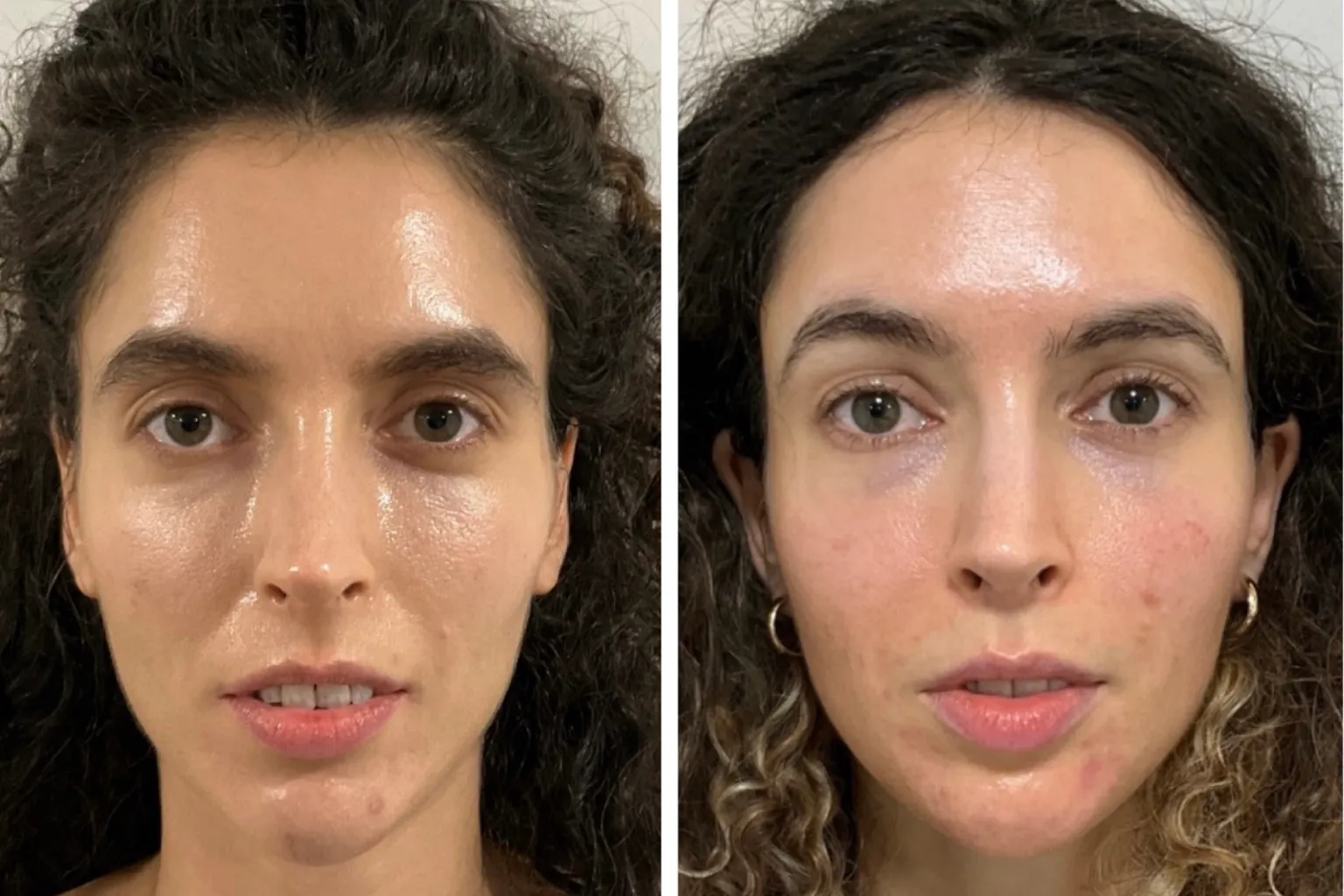
Up until recent years, aesthetic medicine focused almost exclusively on wrinkles. The assumption was simple… smooth the lines and the face looks younger. However, we now know that ageing is far more complex than that. Changes in skin quality, hydration, elasticity, collagen density, and even the underlying fat compartments all play a role in how the face ages and how tired or aged it appears [1][2].
At the Anti Wrinkle Clinic, rather than asking “where are the wrinkles?”, the more meaningful questions I look to answer are – how healthy is the skin, how well is it hydrated, how resilient is its structure, and which layers are actually driving the visible changes.
Nowadays, injectable treatments are no longer just about adding volume or relaxing muscles. Modern treatment options work at different biological levels, improving skin quality, supporting collagen and elastin production, and addressing age-related structural changes that skincare alone cannot reach [3].
Profhilo is one of the treatments that helped drive this evolution.
This treatment introduced the concept of bio-remodelling, rather than filling or reshaping [4][5]. Over time, the Profhilo range has expanded, and this is where some confusion may arise for patients. Profhilo is no longer a single injectable product, but a family of treatments designed to address different aspects of the ageing process.
In this guide, I want to explain Profhilo properly. Not just what it is, but how the different Profhilo products work, how they differ from one another, and how they compare to other injectable treatments. My aim is to help you understand which option may be appropriate for your skin, and just as importantly, when Profhilo is not the right choice.
What is Profhilo?
Profhilo uses ultrapure hyaluronic acid arranged into hybrid cooperative complexes [4]. It spreads evenly through the tissue after injection instead of sitting in one place. This allows it to act primarily as a bio-remodelling treatment, improving hydration and stimulating the skin’s own regenerative processes rather than altering facial shape [5][6].
Profhilo is not designed to lift, sculpt, or volumise. Its role is to improve the quality of the skin and supporting tissues, helping the face look fresher, firmer, and more resilient over time.
The Profhilo range explained
Although the name Profhilo is often used as if it refers to a single treatment, it is more accurate to think of Profhilo as a platform. Each product within the Profhilo range targets a different layer or mechanism of ageing. Understanding these differences is essential for appropriate treatment selection.
Profhilo (Face)
When most people refer to Profhilo, they are talking about facial Profhilo. This is the original formulation and remains one of the most effective injectable treatments for improving overall skin quality.
As mentioned, it contains a high concentration of ultrapure hyaluronic acid arranged into hybrid cooperative complexes. Because the hyaluronic acid is not chemically cross-linked, it spreads evenly within the superficial dermal layers rather than remaining localised at the injection point [4][6].
Its primary actions are deep hydration and stimulation of the skin’s own repair mechanisms. Hyaluronic acid attracts and binds water, improving hydration almost immediately. At the same time, Profhilo stimulates fibroblasts to increase collagen and elastin production over the weeks following treatment [5][7]. These processes work together to improve elasticity, firmness, and overall skin radiance in a gradual and natural way.
Facial Profhilo is particularly well suited to patients who feel their skin looks tired, dull, droopy, or dehydrated, even if they do not have deep wrinkles or significant sagging. It is commonly used in the mid and lower face, where loss of hydration and elasticity often becomes apparent first. Importantly, Profhilo does not change facial shape, does not add projection, and does not replace volume.
The treatment follows a two-session protocol, with the second session performed 3–5 weeks after the first. Improvements develop progressively, with results beginning to soften around 3–4 months as the product is naturally metabolised [4][6]. For this reason, maintenance treatments are usually planned at this interval to sustain skin quality over time.
Profhilo Structura
Profhilo Structura is fundamentally different from facial Profhilo, and this distinction is crucial. While facial Profhilo targets the dermal layer and skin quality, Structura is designed to address age-related changes in the facial fat compartments.
What many of my patients don’t know is that facial ageing is not limited to skin thinning and collagen loss. Facial fat pads undergo deflation and changes in position, and function over time. These changes contribute significantly to hollowing, loss of youthful contours, and a tired or aged appearance, even in patients with relatively good skin quality [8][9].
Profhilo Structura uses a modified hybrid hyaluronic acid complex designed to interact with deeper tissue environments associated with fat compartment ageing. It is not a volumising filler and does not behave like traditional cross-linked hyaluronic acid products [10]. Instead, its role is to support the biological environment of ageing fat tissue, helping to counteract deflation-related changes in a subtle and progressive way.
Patients who benefit most from Profhilo Structura are those showing early to moderate signs of age-related volume deflation, particularly when this contributes to a hollowed appearance rather than loose skin alone. This treatment can form part of a longer-term strategy aimed at maintaining facial structure rather than chasing visible volume loss once it becomes advanced.
Profhilo Body
Profhilo Body applies the same hybrid hyaluronic acid technology to larger body areas affected by skin laxity, thinning, and reduced elasticity.
Areas such as the neck, decolletage, upper arms, elbows, abdomen and knees commonly show age-related changes in collagen organisation, hydration, and elastic fibre integrity, particularly following weight loss, pregnancy, or hormonal shifts [11].
Profhilo Body is designed to improve skin quality by enhancing hydration and stimulating collagen and elastin synthesis across wider treatment zones [12]. Because body skin behaves differently from facial skin, this treatment is supported by a dedicated home-care protocol designed to optimise and maintain results.
As with facial Profhilo, Profhilo Body does not add volume or tighten skin in a surgical sense. It is best suited to patients seeking improvements in texture, firmness, and overall skin quality where invasive procedures are not indicated. It’s also important to note that advanced skin laxity or excess skin may require alternative treatment approaches.
When used together, the Profhilo range allows for a layered approach to ageing. Facial Profhilo targets skin quality, Profhilo Structura addresses deeper age-related structural changes, and Profhilo Body extends bio-remodelling beyond the face.
Profhilo vs other injectable treatments
One of the best questions I like to hear from patients is not simply “what does Profhilo do?”, but “how do I know whether Profhilo is the right treatment compared to everything else available?”. These are the types of questions I encourage you ask. Modern aesthetic medicine offers multiple injectable options, each designed to work at different levels of the ageing process.
Profhilo (Face) vs Dermal Fillers
Dermal Fillers are based on cross-linked hyaluronic acid. This cross-linking allows the product to remain where it is placed, providing structure, projection, and volume [13]. Fillers are therefore used to contour the face, restore volume loss, and support areas such as the cheeks, jawline, and deeper folds.
Facial Profhilo behaves very differently. Because it is not cross-linked, it spreads evenly through the superficial dermis, where it improves hydration and stimulates collagen and elastin production [4][5]. Profhilo does not lift, sculpt, or volumise and should not be expected to replace filler when structural support is required.
In practice, fillers change shape, while Profhilo improves skin quality. In many patients, the two treatments are complementary rather than interchangeable.
Profhilo Structura vs Dermal Fillers
This is the most important comparison to make clearly. Although Profhilo Structura is sometimes mistaken for a filler, it does not behave like one and should not be used with the same goals in mind.
Dermal Fillers replace volume directly by occupying space and providing projection. Profhilo Structura, by contrast, is intended to support age-related changes in the facial fat compartments rather than recreate volume artificially [8][10].
Structura is used for shaping, contouring and enhancement of jawline definition by regenerating the fat pads. Its indications are specific and require careful anatomical assessment. For patients with early to moderate signs of volume deflation but relatively preserved facial proportions, Structura may be considered as part of a longer-term strategy aimed at maintaining facial structure.
When contour loss is already advanced, combination of Profhilo Structura with Dermal Fillers may still be more appropriate.
Profhilo Structura vs Sculptra
Profhilo Structura is sometimes discussed alongside Sculptra because both are used in patients concerned about age-related volume changes. However, their mechanisms are fundamentally different.
Sculptra contains poly-L-lactic acid (PLLA), which stimulates collagen production gradually over several months, leading to increased dermal thickness and volume over time [14][15]. Profhilo Structura does not aim to build volume, and instead focuses on supporting the biological environment of ageing fat compartments.
For this reason, the two treatments are not direct alternatives and should not be viewed as interchangeable solutions.
Profhilo (Face) vs Polynucleotides
Polynucleotides work through a different biological pathway. Derived from purified DNA fragments, Polynucleotides support tissue repair, reduce inflammation, improve microcirculation, and enhance fibroblast activity at a cellular level [16][17].
These treatments are particularly useful in fragile or compromised skin, such as the under-eye area, areas affected by scarring, or skin showing inflammation or pigment changes. Profhilo offers more immediate improvements in hydration and firmness across broader areas, whereas polynucleotides excel in improving skin resilience and recovery where tissue quality is impaired.
Profhilo (Face) vs Sunekos
Sunekos combines hyaluronic acid with a specific blend of amino acids designed to stimulate fibroblast activity and support the extracellular matrix, including collagen, elastin, and fibronectin production [18].
Sunekos is particularly effective in delicate areas such as the under-eyes, forehead, and neck and is usually delivered as a course of treatments. Profhilo, by comparison, delivers faster and more noticeable improvements in hydration and elasticity across larger facial areas. The choice depends on skin thickness, treatment area, and treatment goals.
What to expect from Profhilo treatments
Facial Profhilo is administered using a small number of precise injection points that allow the product to disperse evenly through the skin. The injections are superficial and typically well tolerated.
Small raised bumps at the injection sites are common immediately after treatment and usually settle within 4–24 hours as the product spreads [4][6]. The procedure itself takes around 10–15 minutes.
The standard protocol involves two treatment sessions, with the second performed 3–5 weeks after the first. Improvements develop gradually and typically begin to soften around 3–4 months, which is why I usually plan maintenance treatments at this interval.
Profhilo treatment safety and risks
Profhilo has a strong safety profile, largely due to its high-purity hyaluronic acid composition [7]. Most side effects are mild and temporary, including injection-site bumps, mild swelling, tenderness, or occasional bruising [4][6].
More significant complications are uncommon when treatment is performed by an experienced medical practitioner using appropriate technique and patient selection. As with all injectable treatments, risks such as infection or prolonged swelling are possible, which is why consultation, aseptic technique, and clinical judgement are essential.
In my practice, knowing when not to treat is equally as important. Profhilo may need to be postponed or avoided in patients who are pregnant or breastfeeding, have active skin infections, or have certain medical conditions or recent procedures that increase risk.
At the Anti Wrinkle Clinic, consultation is not simply a formality. If Profhilo is not appropriate, I will explain why and recommend safer or more effective alternatives.
Conclusion
Profhilo has expanded what is possible with injectable treatments by addressing skin quality and biological ageing rather than simply altering shape. When used appropriately, the Profhilo range allows for a more focused, long-term approach to facial and body rejuvenation.
If you’re considering Profhilo or want clarity on which treatment is most appropriate for you, the next step is to book a Face-to-face hour at the Anti Wrinkle Clinic. This dedicated consultation allows time for a thorough assessment and an unrushed discussion about realistic options and long-term goals.
For new patients, your Face-to-face hour is currently offered with £100 OFF this initial consultation.
Book Now
References list
[1] Farage MA, et al. Intrinsic and extrinsic factors in skin ageing. Int J Cosmet Sci. 2008.
[2] Coleman SR, Grover R. The anatomy of the ageing face. Plast Reconstr Surg. 2006.
[3] Gilchrest BA. Skin ageing and photoageing. Dermatoendocrinol. 2013.
[4] Dal Farra V, et al. Hybrid cooperative complexes of hyaluronic acid in skin rejuvenation. J Cosmet Dermatol. 2021.
[5] Zerbinati N, et al. Effects of hyaluronic acid hybrid complexes on dermal fibroblasts. Clin Cosmet Investig Dermatol. 2021.
[6] IBSA Farmaceutici. Profhilo Summary of Product Characteristics and Technical Dossier.
[7] Papakonstantinou E, et al. Hyaluronic acid: A key molecule in skin ageing. Dermatoendocrinol. 2012.
[8] Rohrich RJ, Pessa JE. The fat compartments of the face. Plast Reconstr Surg. 2007.
[9] Lambros V. Observations on periorbital and midface ageing. Plast Reconstr Surg. 2007.
[10] IBSA Farmaceutici. Profhilo Structura Technical File.
[11] Baumann L. Skin ageing and body skin changes. Dermatol Clin. 2018.
[12] Zerbinati N, et al. Hybrid hyaluronic acid complexes for body skin laxity. Dermatol Ther. 2022.
[13] Sundaram H, et al. Rheology and cross-linking of hyaluronic acid fillers. Plast Reconstr Surg. 2010.
[14] Vleggaar D, Fitzgerald R. Poly-L-lactic acid for facial volume restoration. J Drugs Dermatol. 2008.
[15] Lowe NJ, et al. Biostimulatory fillers and collagen neogenesis. Dermatol Surg. 2009.
[16] Kim JH, et al. Polynucleotide-based injectable treatments in skin regeneration. J Cosmet Laser Ther. 2020.
[17] Cervelli V, et al. Polynucleotides in regenerative and aesthetic medicine. J Craniofac Surg. 2019.
[18] Papadopoulos L, et al. Amino acid and hyaluronic acid combinations in ECM support. J Cosmet Dermatol. 2020.